
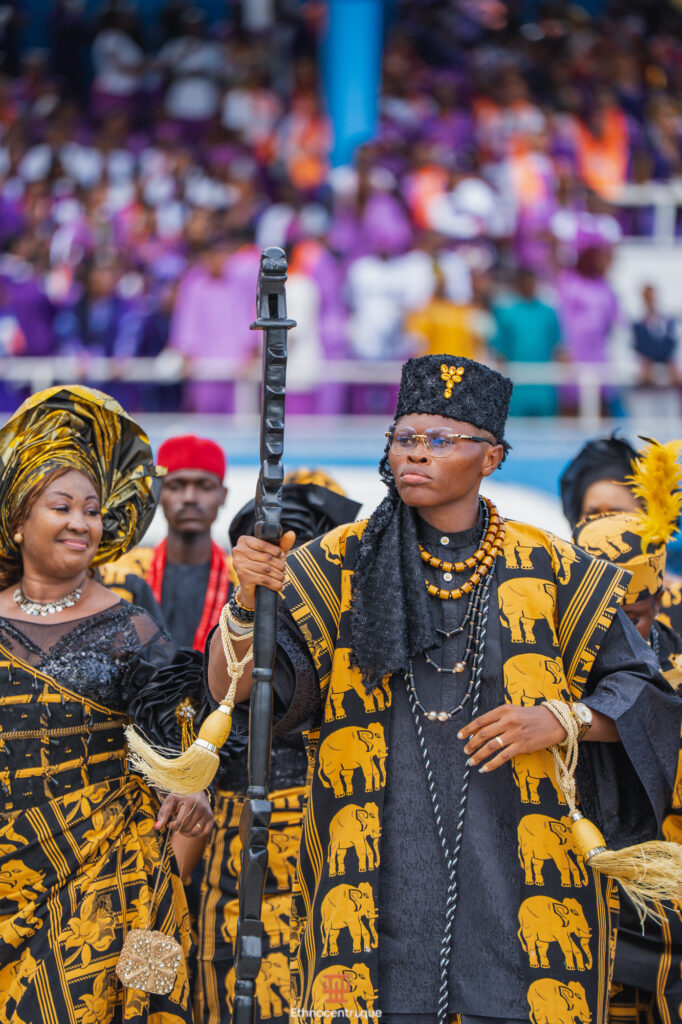
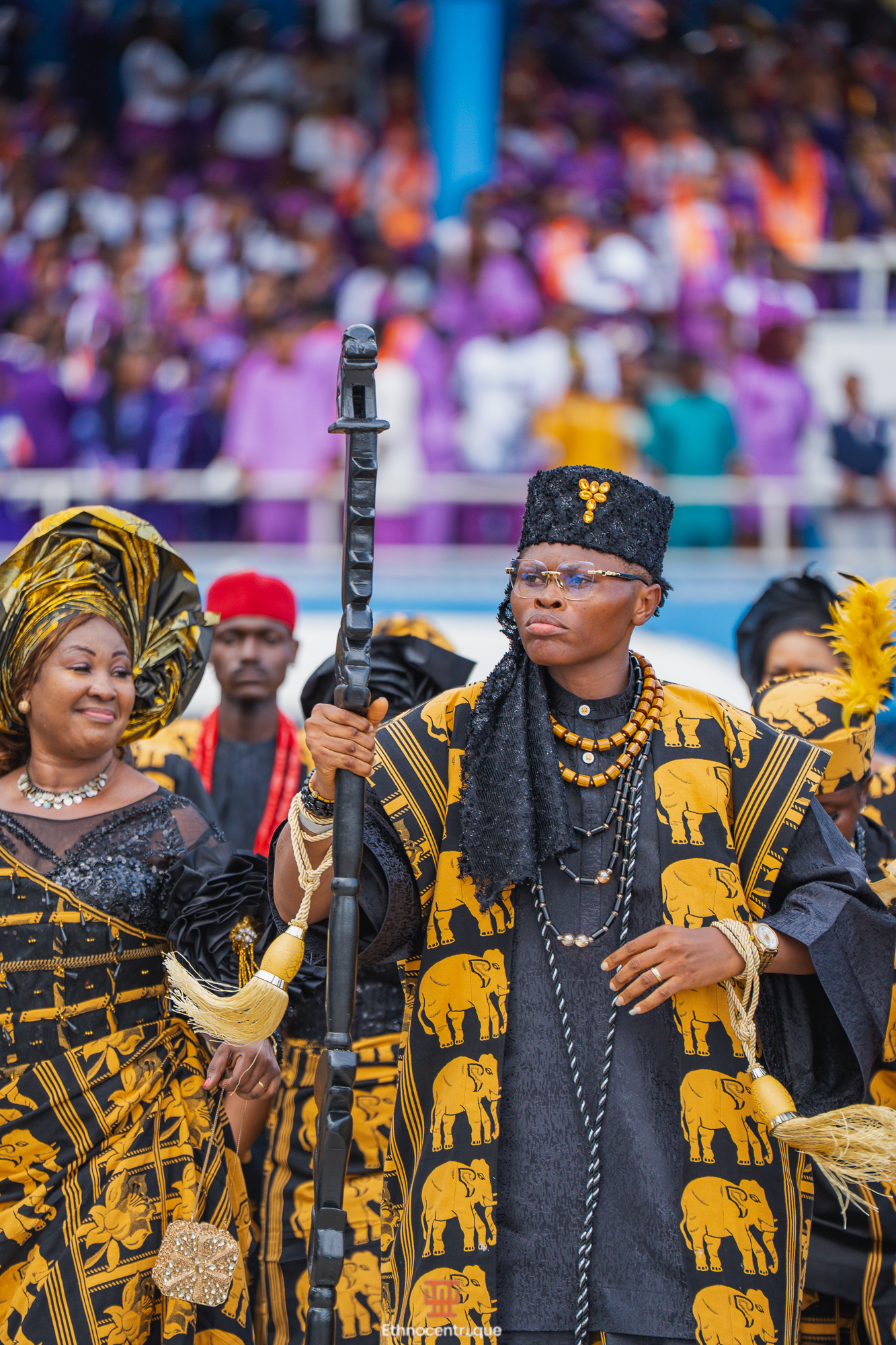
Ethnocentrique’s Fashion Future Program (FFP), implemented in partnership with Mastercard Foundation’s Fashion Future Program (FFP), implemented in partnership with Ethnocentrique Limited, is demonstrating what happens when fashion is treated not as a creative pursuit, but as an economic system.
Over two years of implementation across Aba and surrounding communities in Abia State, the program has reached 10,379 people, a result that reflects a deliberate architecture: skills development, enterprise growth, and market access built into a single coordinated model.
The program was designed to respond to a specific and longstanding challenge within Nigeria’s fashion sector: fragmentation. While the talent base is deep, the systems required to convert that talent into scalable economic value, structured production, financing infrastructure, and market integration, have remained weak or disconnected. FFP was built to close that gap.
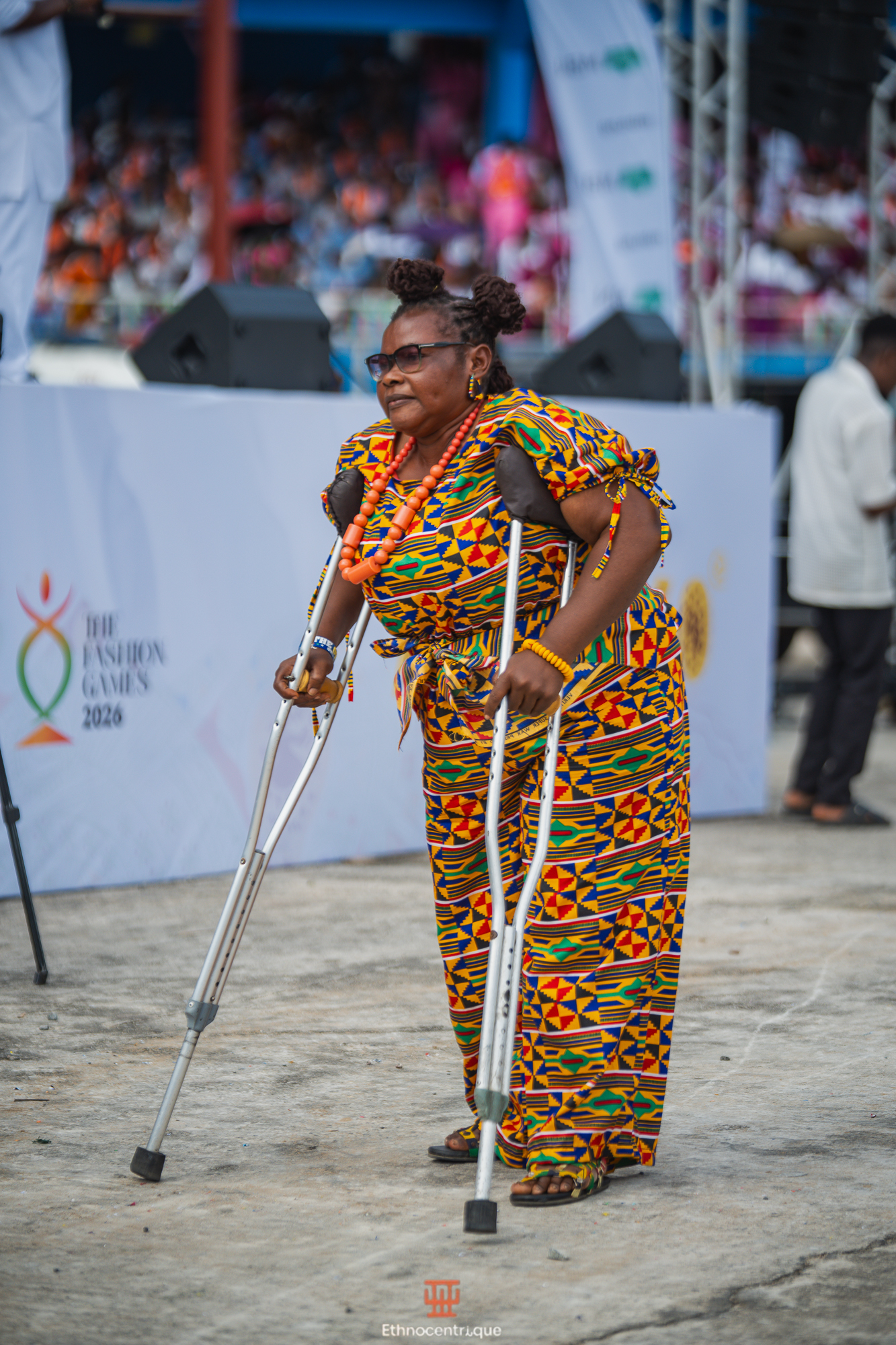
Across the pilot period, the program trained 6,140 young people in garment, footwear, and leather production, with a strong focus on young women and persons with disabilities. A key feature of this approach was the adaptation of the traditional Igbo apprenticeship system, standardized through the National Skills Qualifications Framework (NSQF), bridging informal learning with formal certification at cluster scale.
But skills training was never the terminal goal. Alongside this, the program delivered targeted business development support, financing pathways, market access opportunities, and intellectual property awareness to over 4,240 MSMEs, strengthening the businesses that absorb and sustain the skills being built.

The results are beginning to compound. To date, the program has contributed to the creation and sustainment of over 10,000 primary and secondary jobs, while facilitating more than ₦200 million in orders processed through program-supported businesses. Women account for over 80 per cent of participants, and 282 persons with disabilities have successfully established businesses through the program.
Speaking at the close of the pilot phase during The Fashion Games 2026 in Aba, Program Coordinator Jeremiah Ubunama framed the program’s founding logic saying;
“When we came to Aba, we asked a question: what if we stop seeing fashion as style and start seeing it as an economy?”
That question has guided the program’s design and points to the broader hypothesis being tested: that sustainable growth in Nigeria’s fashion sector will not come from isolated interventions, but from coordinated ecosystems where skills, enterprise support, financing, and policy engagement function as parts of a coherent system.
Country Director for Nigeria at Mastercard Foundation, Rosy Fynn, confirmed that the program has exceeded its targets, with documented results across economic participation, enterprise development, and inclusion for young women and persons with disabilities.
Chief Executive Officer of Ethnocentrique Limited, Irunna Ejibe, addressed what she identified as the root cause of sector underperformance:
“Ecosystems don’t fail from lack of effort, but from lack of coordination.”
To address this, the program worked to integrate ecosystem functions that typically operate in isolation. This has led to the structuring of over 4,000 businesses and their clustering into 99 formalized MSME cooperatives, improving access to finance and expanding collective production capacity at scale.
Stakeholders at the event reinforced the urgency of this approach, identifying limited access to finance, weak production systems, and inconsistent quality standards as persistent barriers to scale. Strengthening governance structures, improving business record-keeping, and deepening formalization were identified as critical next steps toward unlocking sustainable growth in the sector.
Abia State Governor Alex Otti reaffirmed the government’s commitment to this direction, positioning Aba as a competitive manufacturing hub for Nigeria’s fashion industry.
As the pilot phase concludes, the program enters a new stage focused on translating the Aba model into a broader deployment framework for Nigeria and the region.
The lesson is clear: building a globally competitive fashion industry in Nigeria will require more than talent or training. It will require coordinated systems that connect people, businesses, finance, and markets in ways that allow value to move consistently, at a scale that changes the sector, not just the individuals within it.

About the Fashion Future Program
The Fashion Future Program is a Mastercard Foundation program implemented in partnership with Ethnocentrique Limited. It is a youth apprenticeship and MSME development intervention focused on the Aba fashion and leather production cluster in Abia State, Nigeria.
About Ethnocentrique Limited
Ethnocentrique builds the full infrastructure stack — skills, finance, markets, and policy — for fashion’s human capital in Nigeria. Its work spans the complete local fashion loop: garments, footwear, bags, slippers, leather goods, and accessories. Its programs include the Fashion Future Program (FFP); a Mastercard Foundation program implemented in partnership with Ethnocentrique, African Cobblers Ltd, Ethnocentrique Arts, and The Fashion Games.



Sponsored Content
The post The Fashion Future Program Reaches 10,379 People as Pilot Phase Concludes in Aba appeared first on BellaNaija – Showcasing Africa to the world. Read today!.
Written By FFP
The post The Fashion Future Program Reaches 10,379 People as Pilot Phase Concludes in Aba appeared first on BellaNaija – Showcasing Africa to the world. Read today!. Read More