
What Our 2025 Data Tells Us About Education and Opportunity in East Africa
Each year, we sit with our data and ask a harder question than “did we hit our targets?” We ask what actually changed for a young person in rural Kenya, Uganda, or Tanzania. In 2025, some of the answers were genuinely unexpected.
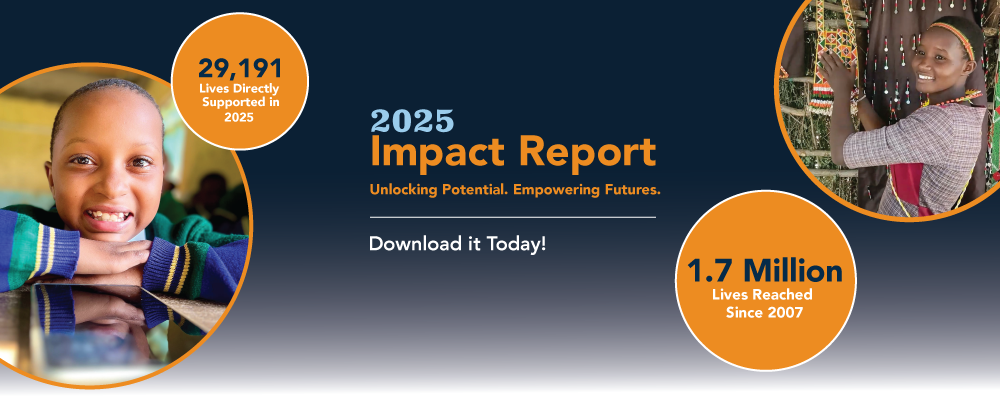
Across these three East African countries, our programs directly reached 29,191 young people. But the number we keep coming back to is what sits behind that figure: the shifts in confidence, new opportunities to earn, and the ambition that don’t show up in a single headline stat.
Here’s the breakdown by country:

The Numbers That Tell a Real Story
Looking at outcomes rather than reach, the data points to something larger than programme delivery. It points to a generation getting ready to lead.
-
-
- 91% of our Youth Livelihood Program (YLP) students created a career action plan
- 94% of scholarship students passed national exams and qualified for college
- 100% of digital apprentice students secured an economic path forward (a job, training, or business opportunity)
- 87% of Wezesha Vijana students transitioned to high school (a strong result in a region where not all students go on to secondary school).
-
These figures reflect genuine behavioural change. Students who can name their ambitions, map a route to them, and take the first step.
Green Enterprise, Conflict Resolution, and a Broader Picture
The Youth Livelihood Program produced something worth pausing on: 42% of youth businesses launched were green enterprises. A generation thinking about sustainability alongside profit. Add to that a 44% improvement in conflict resolution skills – and its worth mentioning what that actually means. In communities where land disputes, resource scarcity, and inter-generational tension are everyday realities, a young person who can mediate, listen, and hold space for disagreement is a stabilizing force. You start to see young people learning to navigate their communities, not just the job market.
What This Means Going Into 2026…
The 2025 data shapes what we build next. We are expanding our Pay it Forward model, deepening alumni engagement, and moving toward youth and women-led structures across the organisation. Since 2007, we have reached 1.7 million lives – through direct participation and youth-led Pay it Forward projects – and we are building the systems to go further.
The progress across Kenya, Uganda, and Tanzania in 2025 is proof of something we have believed since 2007. Each country tells a distinct story – together, they tell one about what’s possible when education is treated as the foundation for everything else. That’s what we’ve seen: invest in young people early, give them real skills and real opportunities, and they will do the rest.