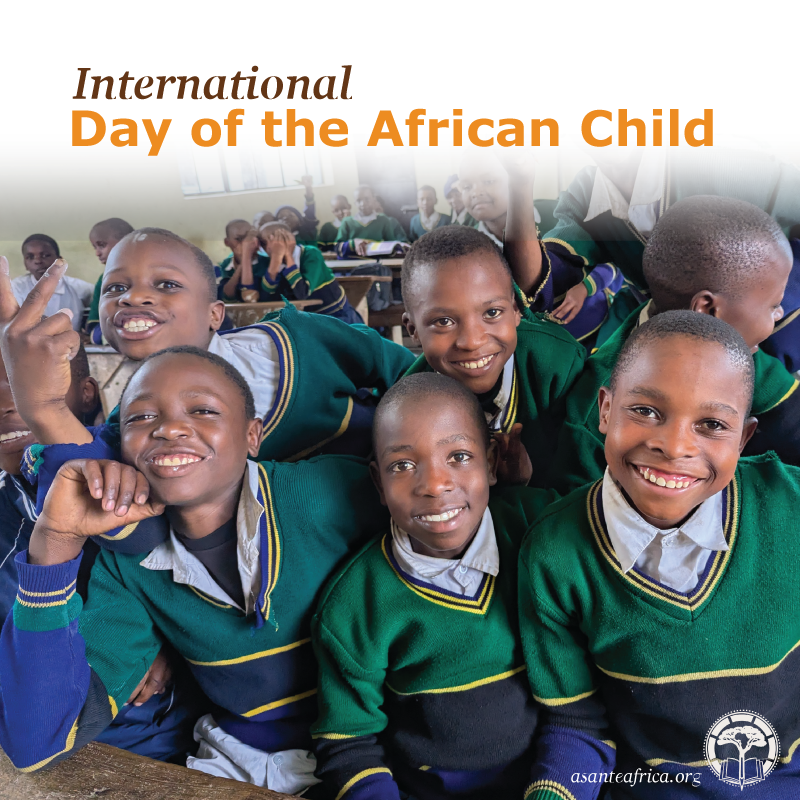
Understanding How Youth Can Change Society on the International Day of the African Child
 Every year on June 16, the world pauses to honour the Day of the African Child. A day born not from celebration, but from courage. In 1976, thousands of Black schoolchildren in Soweto, South Africa, took to the streets to protest the poor quality of education they were forced to endure under apartheid. Their bravery, and the tragedy that followed, sparked a movement that the Organisation of African Unity immortalised in 1991 as a day of reflection, advocacy, and action for Africa’s children.
Fifty years on from Soweto, the spirit of those young people lives on in every African child who dares to dream bigger than their circumstances. And in 2026, the question those children asked – why don’t we deserve better? – is still the most important question on the continent.
Youth Empowerment Is Not a Privilege. It’s a Necessity.
Africa is the world’s youngest continent. More than 60% of its population is under the age of 25. This is not just a demographic fact. It is a profound opportunity. When young people are equipped with the right tools, they do not merely improve their own lives; they transform their communities, their economies, and the continent at large.
Yet the gap between potential and opportunity remains vast. Youth unemployment in Sub-Saharan Africa regularly tops 30%, with rates for young women in rural areas reaching as high as 60%. These are not just numbers. They represent young people whose talent, creativity, and drive are going untapped, not for lack of ambition, but for lack of access.
This is exactly why youth empowerment programs are not a luxury. They are the foundation on which Africa’s future will be built.
How Youth Change Society: The Ripple Effect
When a young person gains a skill, the impact does not stop with them. A girl who learns financial literacy teaches her family how to save. A young man trained in entrepreneurship creates jobs for his neighbours. A rural community where youth are educated becomes a community that advocates for itself, holds leaders accountable, and builds sustainable local economies.
History confirms this pattern. The students of Soweto did not just protest for themselves, their actions reshaped the trajectory of an entire nation. Today, young Africans are doing the same, not through uprising, but through innovation, leadership, and enterprise. They are solving local problems with local knowledge, and the world is paying attention.
 What Asante Africa Foundation Does
At Asante Africa Foundation, we believe that everyone has talent and potential, but not everyone has access to opportunities. Since our founding, we have worked to close that gap for vulnerable and underserved youth across East Africa, from the earliest days rooted in two small villages in Kenya and Tanzania to a growing network of programs reaching hundreds of thousands of young people.
Our flagship Youth Livelihood Program (YLP) is built on the understanding that lasting change requires more than one skill. The program combines entrepreneurship training, financial literacy, employability skills, and digital literacy, equipping young people not only to find work but also to create it. Graduates like Nicholas in Kenya have gone on to form youth cooperatives, cultivate land, and build agricultural enterprises that feed and sustain entire communities.
Our Digital Employability and Entrepreneurship Program (DEEP) goes further still, bringing critical digital skills to out-of-school youth in rural areas, often the young people furthest from opportunity. In partnership with industry leaders like Google and Cisco, we ensure participants gain real-world, market-relevant experience. Young women like Yvonne, a single mother in Kenya, have used these skills to transform small businesses into thriving digital enterprises.
All of three of our programs (Youth Livelihood, Wezesha Vijana, and Accelerated Learning) are grounded in four cross-cutting values: gender equality, inclusion of the marginalised, climate sustainability, and community engagement. Our staff come from the communities they serve, and our programmes are shaped by the input of local youth leaders and parents, because solutions designed with communities last far longer than those imposed upon them.
By 2025, we have surpassed our goal to reach 1.6 million young people with the skills and confidence to become effective change agents. The work continues.
Honouring the Day of the African Child in Action
The Day of the African Child asks us to reflect, but more importantly, it asks us to act. Reflection without action is just remembrance. What Africa’s children need is investment: in schools, in skills, in the belief that their futures are worth funding.
This June 16, we invite you to stand with Africa’s youth. Share their stories. Support their programs. Demand that the next generation gets the resources they need, not just to survive, but to lead.
The children of Soweto changed history with nothing but conviction. Imagine what today’s African youth can do with opportunity.