
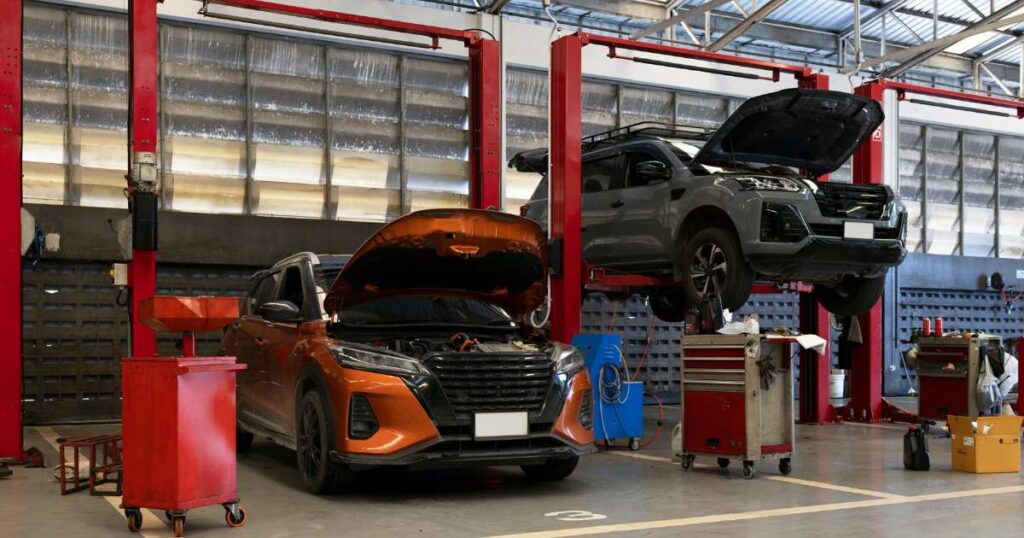
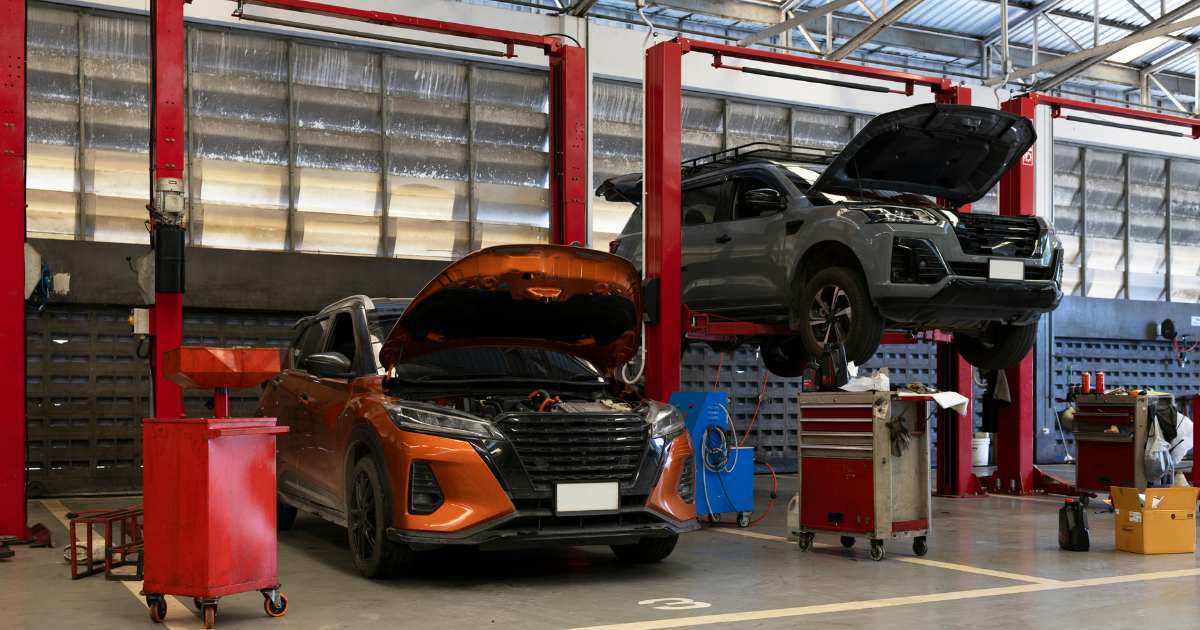
South Africa – until recently – was Africa’s most industrialised economy. The country’s industrial economy is driven by numerous factors, including a resilient small to medium-sized enterprise (SME) sector. The SME sector spans a range of industries, including motor body repairs.
The South African motor body repair industry is an incredibly lucrative, yet highly regulated market valued at over R30 billion annually. Although quite lucrative, SMEs face challenges in getting in because of high setup costs, strict manufacturer compliance requirements, and an ongoing artisan skills shortage.
The sector has a difficult entry barrier, but it does not mean that SMEs cannot participate. Technology has levelled the playing field in the panel beating and motor body repair industry by lowering high entry barriers. Software, diagnostic tools, and digital platforms enable SMEs to bypass massive traditional setups, achieve OEM-level precision, and directly compete for lucrative insurance and consumer contracts.
In this article, we outline what a panel beating service is, the different types and how you can get your SAMBRA accreditation.
What is a Motor Body Repair Business?
A motor body repair business (commonly known as a panel beating shop) restores vehicles involved in collisions to their original, roadworthy condition. These businesses handle everything from minor cosmetic dents to major structural chassis straightening and spray painting.
Core revenue streams in motor body repair
These are the different ways you can make money at a motor body repair shop.
- Insurance work: This forms the bedrock of most established panel beating operations. Following vehicle accidents, insurance companies direct policyholders to approved repairers. This work is characterised by its volume, often substantial repair values, and, critically, guaranteed payment from the insurer. The administrative burden can be higher, but the consistent flow of work makes it a cornerstone of revenue stability.
- Cash-based jobs: These are repairs paid for directly by the vehicle owner, often for minor dents, scratches, or non-insured cosmetic work. While individual job values might be lower than insurance claims, cash jobs typically offer higher gross margins due to reduced administrative expenses and direct negotiation.
- Fleet contracts: Securing contracts with vehicle fleets (e.g., rental companies, courier services, corporate fleets) provides a predictable and recurring revenue stream. These contracts often involve regular maintenance, minor repairs, and accident damage. While pricing might be negotiated to a preferential rate, the volume and consistency make them highly desirable.
- Specialised services: Beyond standard accident repair, shops can generate additional revenue from services like vehicle customisation, classic car restoration, paint protection film (PPF) application, ceramic coating, headlight restoration, and advanced diagnostic services related to accident damage (e.g., ADAS recalibration). These niche services often command premium pricing and attract a different customer segment.
Regulations Governing the Motor Body Repair Industry
As mentioned above, the industry is heavily regulated to ensure safety, quality and environmental compliance. Key regulatory bodies and frameworks include:
- South African Motor Body Repairers’ Association (SAMBRA): A division of the Retail Motor Industry Organisation (RRMI), SAMBRA is the primary accrediting body for motor body repairers. Membership is voluntary but virtually essential for securing insurer work. SAMBRA sets technical standards, ethical guidelines, and categorises workshops based on their capabilities (e.g., Structural Repairer, Major Structural Repairer).
- Environmental law: Strict adherence to environmental laws regarding waste disposal (paint waste, solvents, metal scraps), air emissions (from spray booths), and water usage.
- Occupational Health and Safety Act (OHSA): Ensures a safe working environment for employees.
- National Road Traffic Act: Pertains to vehicle roadworthiness after repairs.
What is SAMBRA Accreditation and How to Get Yours
SAMBRA accreditation is a recognised standard in South Africa’s motor body repair (panel beating) industry. It verifies that a repair shop complies with strict equipment, financial, and ethical standards, and handles most of the insured repairs nationally.
How to get SAMBRA accredited
SAMBRA members enjoy many unique benefits through its affiliation with the RMI, which will not only benefit you, but ultimately, your customers too. To become a member, you will need to contact your nearest SAMBRA regional office, where you will be connected with a SAMBRA regional representative (RR).
The representative will request certain information before making an appointment to visit your business premises. The membership conditions, benefits and fees will be discussed with you either online or during an in-person appointment.
You will need to have the following information available:
- Company details
- Company registration number
- Motor Industry Bargaining Council (MIBCO) number
- Copies of your trade qualifications (spray painter, panel beater etc.)
- Photos of your business premises
Once all the required documents have been submitted, you will have to pay a joining fee. The fees are generally combined with your monthly RMI (Retail Motor Industry Organisation) membership and audit subscription.
Once this process is complete, the SAMBRA RR will advise you which grading process you are required to undergo, which will depend on the current status of your business. Check out the grading criteria checklist here.
Becoming a Motor Body Repairer for Large Corporations
To become a motor body repairer (panel beater) for large corporations or major fleets in South Africa, you need a recognised Trade Certificate. You must also register with the Motor Industry Bargaining Council (MIBCO) and secure specific safety and equipment accreditations.
As an example, let’s look at the requirements to become a motor body repairer for Santam.
Step 1: Application registration on Santam Supplier Portals
Use the following link to access the Vendor Portal: https://supplier.santam.co.za/slvp.
Step 2: Minimum mandatory entry-level criteria
In this step, you will be shown the requirements for the application and will have to upload the documents on the portal. Minimum requirements are:
- · Provide company registration documents (CIPC ownership certificate)
- · Provide owner(s) ID copies (must be certified)
- · Provide proof of shareholding (include a summary of the shareholding)
- · Proof of banking letter (stamped and not older than 90 days)
- · Provide a tax clearance certificate (Tax pin status needs to be in good standing)
- · Provide B-BBEE certificate or B-BBEE affidavit
- · Provide proof of insurance summary (summary of coverage confirming cover of no less than R2 million per occurrence for Public Liability, Fire and Theft Loss and SASRIA).
Step 3: Operational requirements
Operational minimum requirements are needed in order for an application to be considered for inclusion on Santam’s panel of repairers. These include:
- MIBCO forecast to confirm employment of a body repairer and spray painter
- Upload the current Audatex statement
- Upload operational health and safety (OHS) certification
- Upload the vehicle damage quantifier (VDQ) certificate
- Upload the firefighting equipment certificate of completion
- Upload zoning confirmation (confirmation of specific zone classification of the land parcel where your business is situated)
- Upload your grading certificate
- Original equipment manufacturer approval (where available)
Step 4: Site requirements
Upload photographs (at least 1 x clear photograph per section saved in a PDF format) of the following designated working areas are required.
- Signage including outside signage photographs of business name, contact details and business hours needs to be clearly visible from outside your company. Photographs of working areas need to display clear signage.
- Workshop area with the following photos:
-
- Full frontal view of the shop
- Clearly visible indemnity signage
- Client parking area
- Reception area
- Customer seating area (away from workshop or repair area)
- Client ablution facilities
- Admin/office area
- Staff area
- Paint preparation area
- Spray booth, equipment (including inside photos and service records)
- Photo of your fire equipment (including service records)
- Parts storage area
- Delivery bay/stripping and assembly bay/panel beating bay/wheel alignment bay/chassis straightening/vehicle lift/pit area/inspection and wash bay
Step 5: Technical requirements
Photographs (at least 1x clear photograph with signage of each area and saved in a PDF format) of the following designated working areas are required.
The following photos are required:
- Paint ship (enclosed spray booth or room). The area must include the following:
-
- Must be a fully functional spray booth and paint mixing room with minimum requirements
- Intake and exhaust system operational
- All filers in place and functional
- Heating system operational
- Control system, lighting switch, timer switch, temperature gauge and pressure gauge all operational
- Fully functional mixing-room mixer
- Calibrated and functional mixing-room scale
- Functional mixing-room computer
- No make-shift spray booth
- Vehicle check-in and check-out list
- Digital assessment capabilities
- General repair equipment (e.g. trolley jack, dent puller, two-post hoist, diagnostic tool and engine compressor)
- Appropriate repair equipment (required for ASR and MSR grades). Equipment must include:
-
- hydraulic equipment
- measuring system
- variety of pulling clamps
- pulling chains
- vehicle holding clamps
- porta power jack
- speed bench
- Korek pulling ram
- air saw grinder
- spot-weld drill
- cutting torch
- CO2 welder
- spot welder
These are the requirements you must meet to become a motor body repair supplier for Santam. Research other larger corporations with supplier lists and check if you qualify. Becoming a supplier for a large business will ensure you have consistent revenue and will help you grow your business.
South Africa – until recently – was Africa’s most industrialised economy. The country’s industrial economy is driven by numerous factors, including a resilient small to… Read More