
Innovation often starts with a frustration. For Dr Sincengile Ntshingila, a biomedical scientist and researcher, that frustration wasn’t just theoretical; it was a daily reality in the lab. Having navigated the steep learning curve of tissue culture, she saw firsthand the barriers students face when theoretical knowledge meets the high-stakes, expensive, and resource-intensive environment of a physical laboratory.
It was this realisation that led to the birth of LabZero, a virtual laboratory training platform designed to equip the next generation of African scientists with the practical skills they need, long before they step into a physical lab.
An Unconventional Start
Dr Ntshingila, founder and CEO of Nothile Biolab and the creator of LabZero, started in agricultural economics and obtained an MBA. “I initially trained and worked in agricultural economics and economic development. I completed a master’s degree in agricultural economics and later an MBA before making a major career transition into biomedical research. I subsequently completed my PhD in Dermatology at the University of Cape Town in 2023 and continued working in drug discovery and development,” she says.
“When I entered the biomedical laboratory environment, I experienced the steep learning curve personally,” she explains. “Tissue culture requires precision, confidence, and consistent aseptic technique. A small mistake can contaminate an experiment, waste expensive reagents, and generate significant plastic waste.”
Seeing both the environmental and educational costs, she initially considered recycling lab waste. However, she quickly pivoted to a more systemic solution: prevention through digital practice. LabZero was born from the desire to allow students to practise safely, reducing contamination and lowering the barriers to entry for biomedical training.
Solving the ‘Access’ Challenge
LabZero is about more than just software; it’s about capacity building. By guiding learners through complex procedures from aseptic gowning and reagent preparation to cell seeding and cryopreservation, the platform allows users to repeat protocols without wasting costly physical resources.
“LabZero is intended to bridge the gap between theoretical scientific education and practical laboratory readiness,” Dr Ntshingila notes. “It isn’t intended to replace physical training, but rather to prepare students to use limited lab time more safely and productively.”
Early testing yielded promising results: 70% of users rated the platform four or five out of five, and the system effectively flagged over 340 protocol deviations. This data-driven approach is critical for institutions aiming to optimise training efficiency.
Navigating the Entrepreneurial Learning Curve
For many scientist-founders, the transition from research to commercialisation is the ultimate hurdle. Dr Ntshingila credits her earlier business training for providing a solid foundation but admits that building a deep-tech startup brings a unique set of challenges.
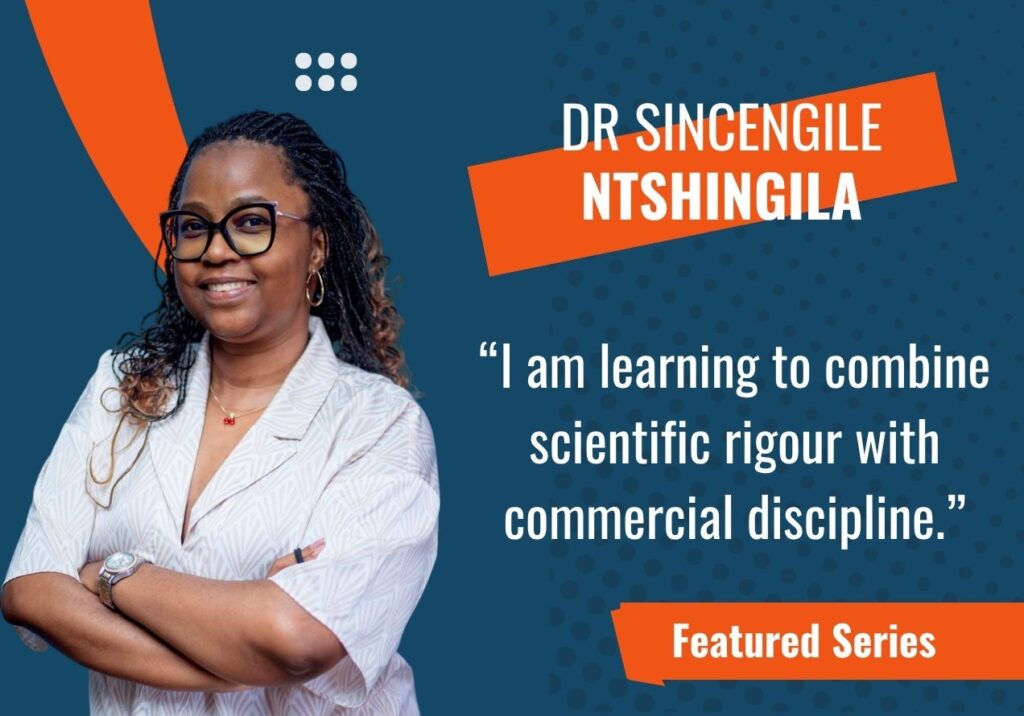
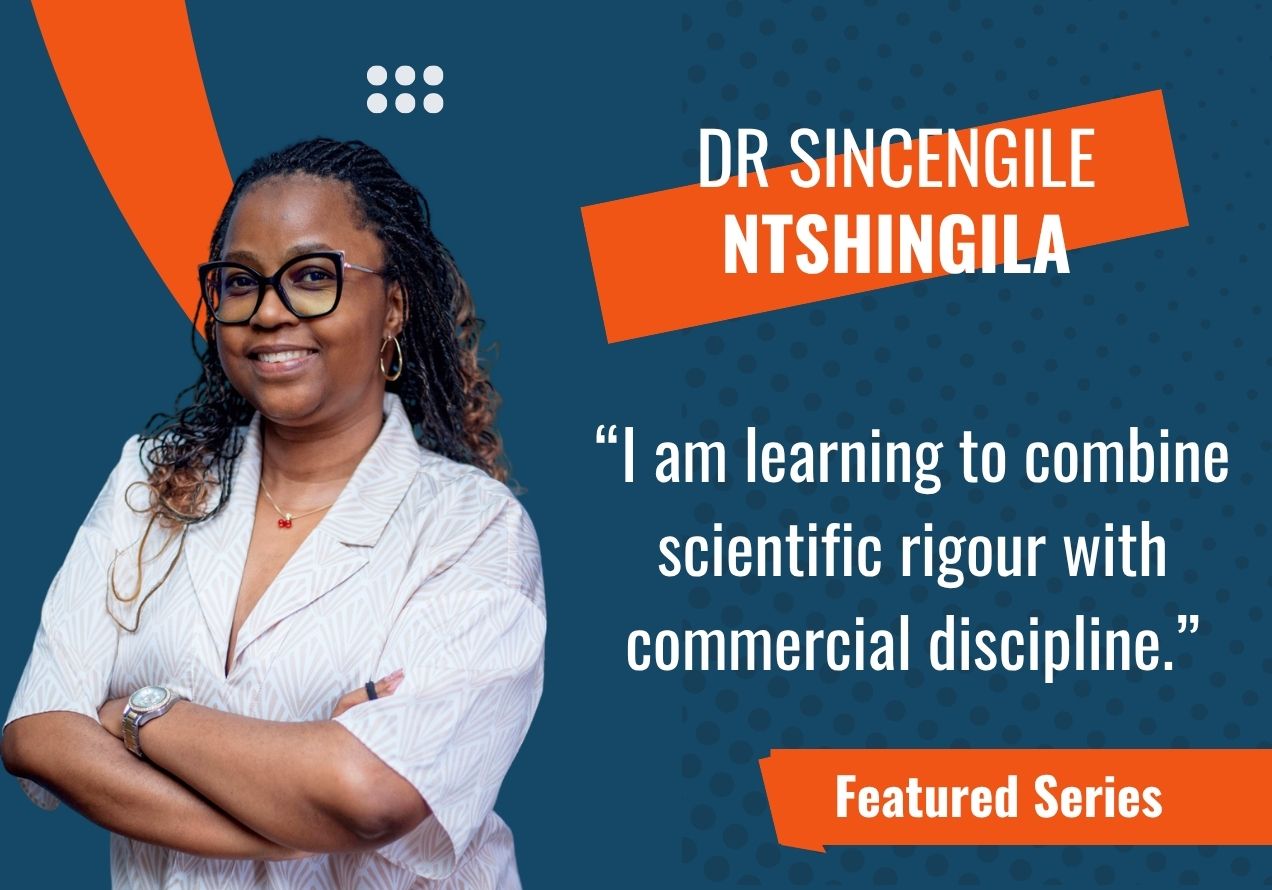
“I am learning to combine scientific rigour with commercial discipline,” she admits. “As a scientist, I naturally want extensive evidence before making a decision. As an entrepreneur, I sometimes have to make a decision with incomplete information, test it quickly, and adjust.”
Her advice to other founders is pragmatic: “Identifying an important problem is not the same as proving that you have a viable business. You must understand who makes the purchasing decision, who controls the budget, and what evidence an institution needs before it will adopt a new product.”
Recognition and the Road Ahead
LabZero’s potential has already earned it a place on the international stage. As a shortlisted innovator for the 2026 Africa Prize for Engineering Innovation, LabZero is one of only two South African ventures in the current cohort. With this recognition, she is joining the South African community that is well-known for its medical innovation. “It is both an honour and a responsibility to join these ranks,” she notes.
The programme, supported by the Royal Academy of Engineering, has been a transformative catalyst for the company’s growth. “We applied because LabZero had reached a stage where we needed more than product development. We needed support to strengthen the company around the technology,” Dr Ntshingila explains. The Africa Prize appealed to her because it combines business training, technical and sector-specific mentoring, and access to potential partners. As a scientist-founder, she specifically sought guidance on validating the commercial model and identifying the strongest market entry point.
Being part of this cohort has proven invaluable. LabZero was selected as one of 16 innovations from 11 African countries – and one of only two from South Africa. The eight-month programme is not merely a competition; it is a structured company-building initiative. Entrepreneurship can be lonely,” she notes. “Being part of a community of other African founders who are solving difficult problems is extremely valuable.”
The programme’s international engagement has been a highlight. A visit to the Royal Academy of Engineering network, including University College London (UCL) and AWS, provided critical technical insights. The engagement at UCL led to a tangible outcome: a referral to Nasim Ahmad, who has since joined LabZero as CTO. “This demonstrated the real value of the Africa Prize network,” Dr Ntshingila says. “It directly connected us to technical expertise and a team member who has become vital to LabZero’s development.”
The Future of LabZero
Looking ahead, the roadmap is clear. “Our immediate priority is to complete and validate the 3D mammalian cell-culture module,” she says. The next stage involves conducting structured institutional pilots to measure improvements in procedural knowledge, confidence, and laboratory readiness, while also quantifying reductions in reagent and disposable material waste.
The business model is transitioning toward an annual subscription, allowing universities and training organisations to provide structured access to students. Once the cell-culture module is validated, the platform is designed to expand into other laboratory areas, such as chemistry, diagnostics, and quality control.
When asked what winning the Africa Prize would mean for the venture, Dr Ntshingila highlights acceleration: “Winning would allow us to move LabZero from a promising, pre-revenue product into a validated and commercially deployable platform.” The funding would fuel development on the 3D platform, strengthen quality-assurance processes, and improve accessibility for institutions with limited infrastructure. Crucially, it would provide the industry credibility needed to secure the first wave of institutional customers.
“I want young African scientists to enter laboratories feeling prepared and confident,” Dr Ntshingila says. “Innovation is not only about producing a new medicine or a piece of equipment. It can also mean building the systems that enable more people to participate meaningfully in science.”
For Dr Ntshingila, LabZero is more than a startup; it’s a commitment to ensuring that advanced scientific environments become accessible to anyone with the talent to pursue them, regardless of their starting point.
Innovation often starts with a frustration. For Dr Sincengile Ntshingila, a biomedical scientist and researcher, that frustration wasn’t just theoretical; it was a daily reality… Read More