
From Classroom to Business: How Youth Entrepreneurship Transforms East African Communities
 A business rarely begins with a storefront, a large investment, or a polished plan. More often, it begins with a student who notices a problem in their community and asks a simple question: What can I do about it?
Across East Africa, young people are converting classroom lessons into practical ideas that generate income, address local challenges, and open doors for the people around them. Their ventures may start small, but the ripple effects rarely stay that way.
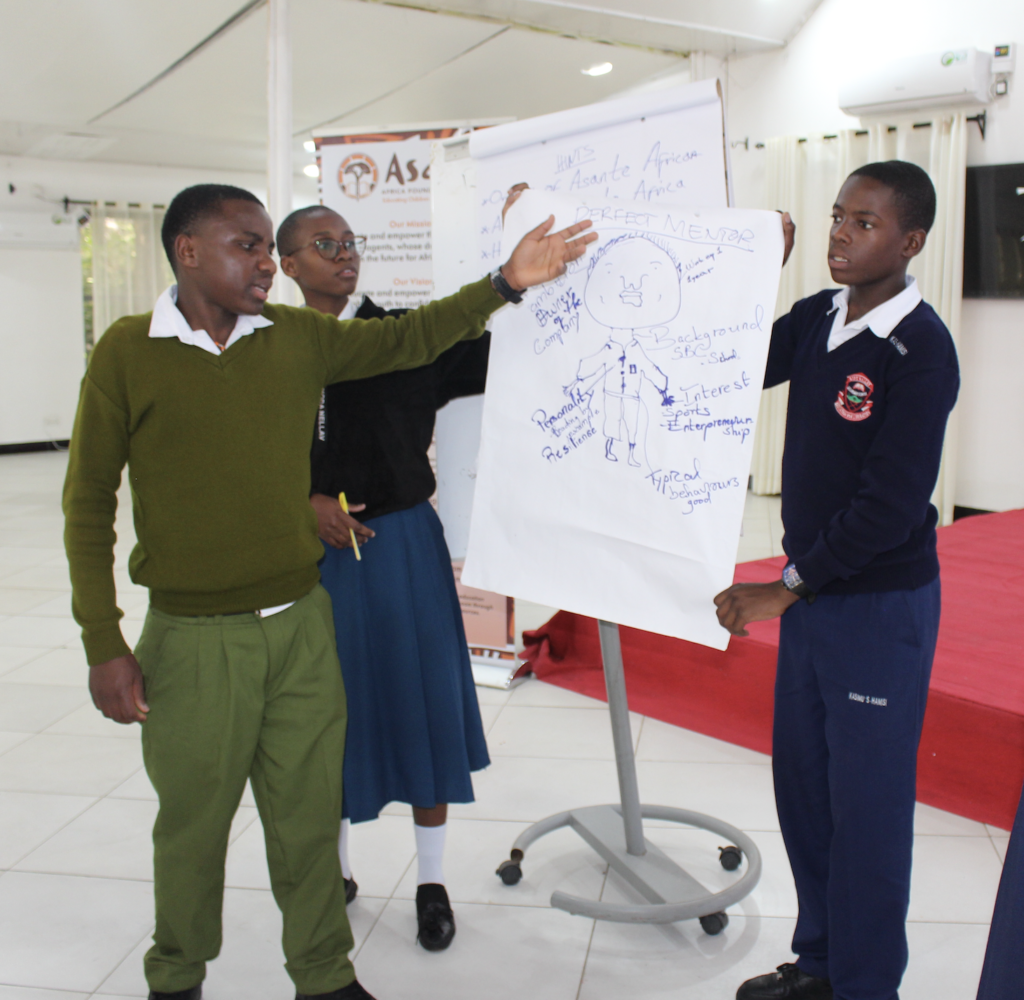
At Asante Africa Foundation, this link between learning and action sits at the center of the Youth Livelihood Program. Through entrepreneurship education, mentorship, financial literacy, and hands-on opportunities like the Enterprise Challenge, students are pushed to build ideas that respond to what they actually see around them.
The result is not simply a new crop of young business owners. It is a generation learning to spot opportunity, solve problems, and take an active role in the economic life of their communities.
Entrepreneurship Starts With a Local Problem
For most young entrepreneurs, the first step is not spotting a business opportunity. It is recognizing a need.
A community may be short on fresh vegetables. A family may need a second stream of income. Organic waste may be piling up with nowhere useful to go. Plastic bottles may be collected along roadsides and market stalls.
Each of these is also a starting point for innovation.
Asante Africa’s programs push students to look closely at their surroundings and ask how their skills and resources might address what they find. This is what makes the training practical. Students are not just memorizing what a business is; they are training themselves to see opportunities where others might see only a nuisance.
From Lessons to Livelihoods
Entrepreneurship education carries the most weight when students get to put it into practice.
Through the Youth Livelihood Program, young people build skills in financial literacy, leadership, entrepreneurship, goal setting, and business development. They learn to think through customers, costs, markets, and the day-to-day realities of running a small enterprise.
The Enterprise Challenge pushes that learning further still.
Students design business ideas, work in teams, and pitch solutions to real problems. Some groups have gone on to build ventures in agriculture, poultry, recycling, beekeeping, and clean energy, each one rooted in something local and specific.
Along the way, students pick up a lesson no textbook can fully teach: a good idea only survives with persistence, adaptation, and the willingness to learn from a first attempt that does not work.
 Small Businesses Can Have a Big Impact
One of the clearest lessons from youth entrepreneurship across East Africa is that impact has little to do with size.
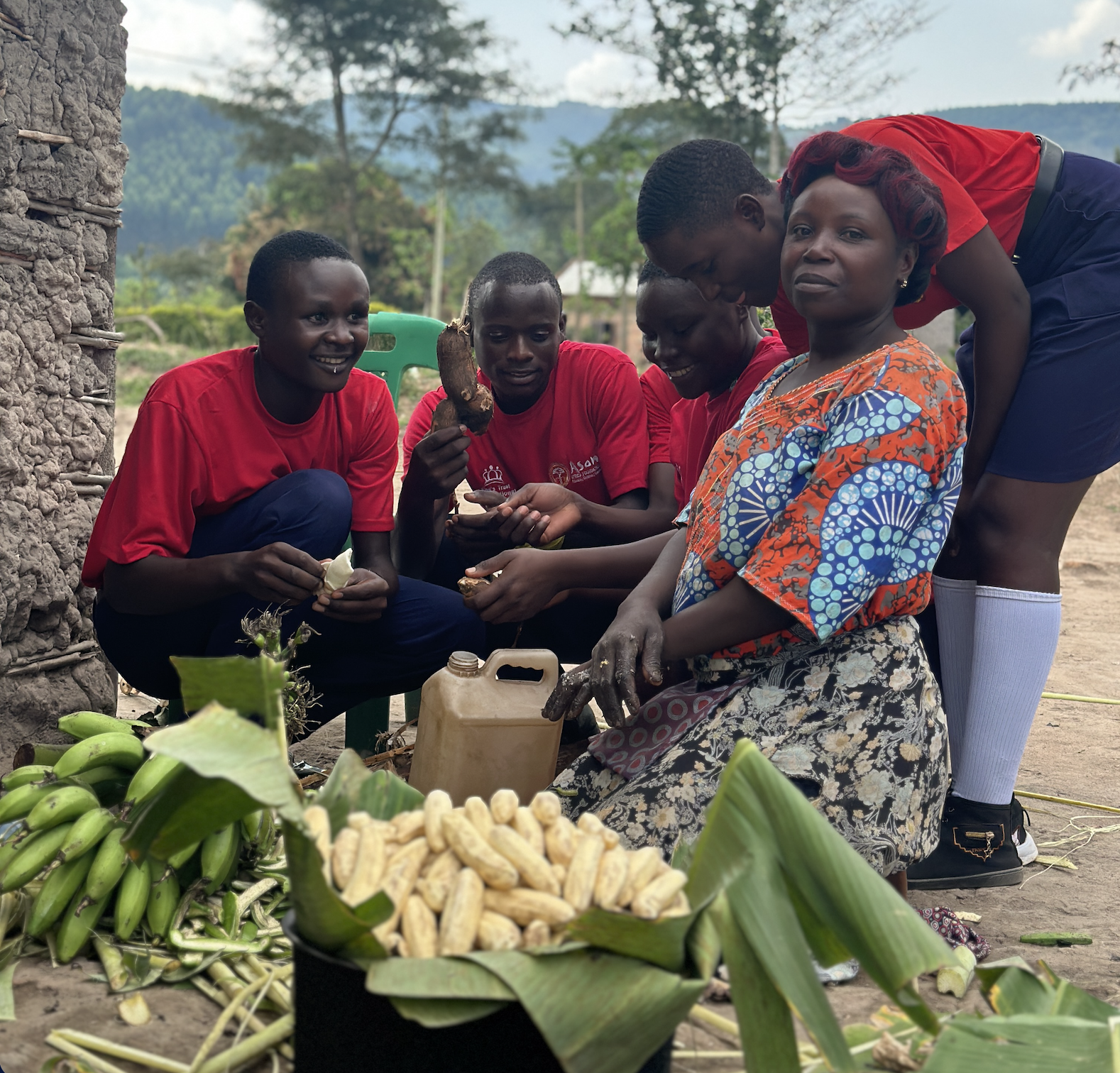
A student raising poultry, selling vegetables, upcycling waste materials, or tending a small garden may be working on a modest scale. But the income that follows can shift what is possible for an entire household.
For some young entrepreneurs, that income covers household expenses. For others, it funds their own education. Either way, the value reaches further than the money itself.
Running even a small enterprise demands planning, communication, financial judgment, problem-solving, and resilience. Those are skills a young person carries forward long after the original venture has changed shape or outgrown its first form.
Turning Waste Into Opportunity
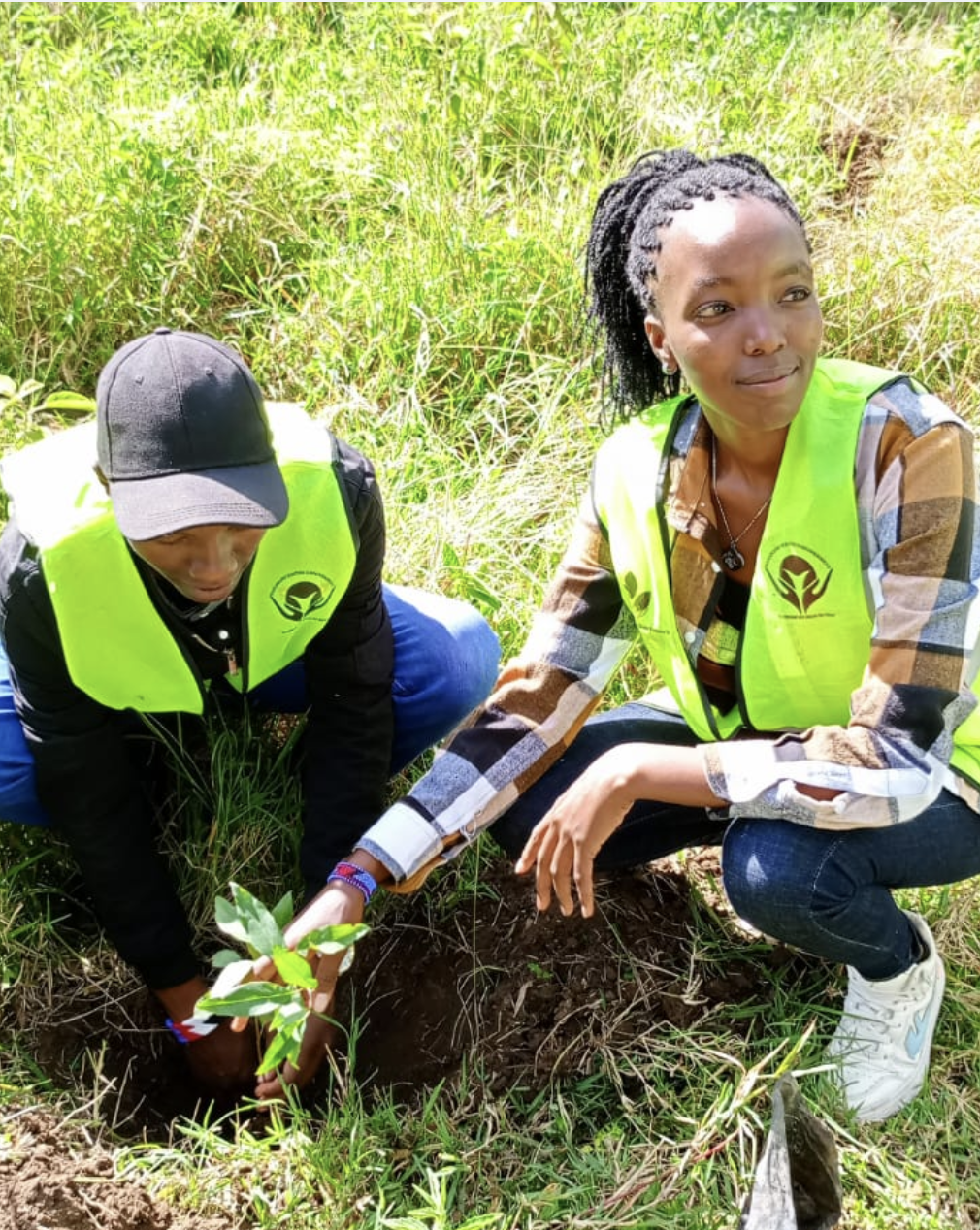
Some of the most striking examples of youth entrepreneurship pair economic opportunity with environmental responsibility.
In Tanzania, students at Magamba Secondary School built a Black Soldier Fly larvae project that tackles organic waste while producing protein-rich animal feed, organic fertilizer, and fishing bait, all from a single overlooked resource. Their project shows what happens when young entrepreneurs look at “waste” and ask whether it might actually be a resource in disguise.
In Uganda, youth-led environmental projects have taken a similar approach to plastic recycling, treating it as both an environmental fix and a viable income stream.
Projects like these point to a core principle of sustainable entrepreneurship: a business can meet a community’s needs without losing sight of its environmental footprint.
 Entrepreneurship Builds Confidence
Starting a business as a young person comes with real friction.
Markets shift. Products spoil. Customers can be hard to find. Resources run thin early on. An idea that looks strong on paper often needs reworking once it meets the actual market.
Those setbacks are not detours from the learning process. They are the learning process.
Youth entrepreneurship programs in Africa give students room to make decisions, test ideas, stumble, and try again. Rather than treating a setback as proof that an idea has failed, students learn to read it as information they can use to improve.
That shift in mindset matters more than it might seem.
A young person who discovers they can identify a problem, shape an idea, manage limited resources, and adjust course when things go sideways walks away with something bigger than business knowledge. They walk away with a sense of their own agency.
The Power of Mentorship and Paying It Forward
Young entrepreneurs also grow through the people willing to share what they already know.
Mentorship runs through every layer of Asante Africa’s approach. Students learn from teachers, community members, program staff, and other mentors who guide them through education, entrepreneurship, and their own personal goals.
Just as central to the model: students are asked to Pay-It-Forward.
This philosophy asks young people to pass on what they’ve learned, mentor those coming up behind them, and put their knowledge to work for their communities.
Entrepreneurship, in this light, becomes more than an individual pursuit. Knowledge moves from one young person to the next, and with it, the possibility for ideas and skills to keep spreading.
Building East Africa’s Next Generation of Entrepreneurs
East Africa’s young people are coming of age inside economies that are shifting fast. Digital technology, evolving markets, climate pressures, and new forms of work are all reshaping what economic opportunity even looks like.
Preparing young people for that landscape takes more than a traditional classroom education. They need room to experiment, build, collaborate, and understand how their skills translate into economic activity.
That is the case for entrepreneurship education.
The goal was never for every student to become a business owner. It is to give young people a sharper understanding of how businesses actually work, how opportunity gets created, and how they might contribute to their community’s economic future.
 From One Idea to a Wider Impact
The most compelling part of youth entrepreneurship often shows up after the initial idea.
A poultry project becomes a steady source of household income. A garden provides both food and revenue. A recycling venture nudges classmates to rethink how they see waste. An agricultural innovation inspires the next group of students to experiment with sustainable practices of their own.
A business might start with one student or one small team, but its influence rarely stops there.
At Asante Africa Foundation, the work is about building the conditions for that first step: skills, mentorship, hands-on experience, and real chances to put knowledge into action.
The ideas, the creativity, and the determination belong to the young people themselves.
Looking Ahead
Youth entrepreneurship will not solve every economic challenge East Africa faces. But it is a meaningful piece of building communities where young people have the skills and confidence to shape their own economic futures.
The journey from classroom to business can start with something as simple as a student noticing a problem and believing there might be a way to solve it.
With education, mentorship, and hands-on experience, that idea can grow into a business. That business can grow into income. And that income can open doors for families and communities.
Across East Africa, young people are proving that entrepreneurship doesn’t require having everything figured out from the start. Sometimes it starts with learning, trying, adjusting, and taking the next step forward.
The classroom lays the foundation. The community provides the spark. And young people carry the ideas the rest of the way.
What is youth entrepreneurship?
Youth entrepreneurship is the process of helping young people develop the skills, knowledge, and confidence to create businesses, solve community problems, and generate income. It can include entrepreneurship education, financial literacy, mentorship, business planning, and hands-on opportunities to test and develop business ideas.
Why is youth entrepreneurship important in Africa?
Youth entrepreneurship can help young people create economic opportunities for themselves while addressing challenges within their communities. Small businesses can generate income, create jobs, improve access to products and services, and encourage young people to become problem-solvers and community leaders.
What are youth entrepreneurship programs in Africa?
Youth entrepreneurship programs in Africa provide young people with practical skills and experiences to explore business and economic opportunities. Programs may include entrepreneurship training, financial literacy, mentorship, leadership development, business competitions, and opportunities to develop and pitch business ideas. Asante Africa Foundation’s Youth Livelihood Program uses these approaches to help young people turn classroom learning into practical solutions.
How does entrepreneurship education help young people?
Entrepreneurship education teaches young people skills that extend beyond starting a business. Students learn financial management, problem-solving, goal setting, communication, leadership, decision-making, and resilience. These skills can help them pursue employment, further education, entrepreneurship, and other economic opportunities.
How does youth entrepreneurship benefit East African communities?
Youth entrepreneurship can create a ripple effect beyond the individual business owner. Young people may generate household income, create employment, provide needed products and services, and develop solutions to local challenges such as waste management, food production, agriculture, and environmental sustainability. Through mentorship and Asante Africa’s Pay-It-Forward approach, young people can also share their skills and knowledge with others in their communities.