
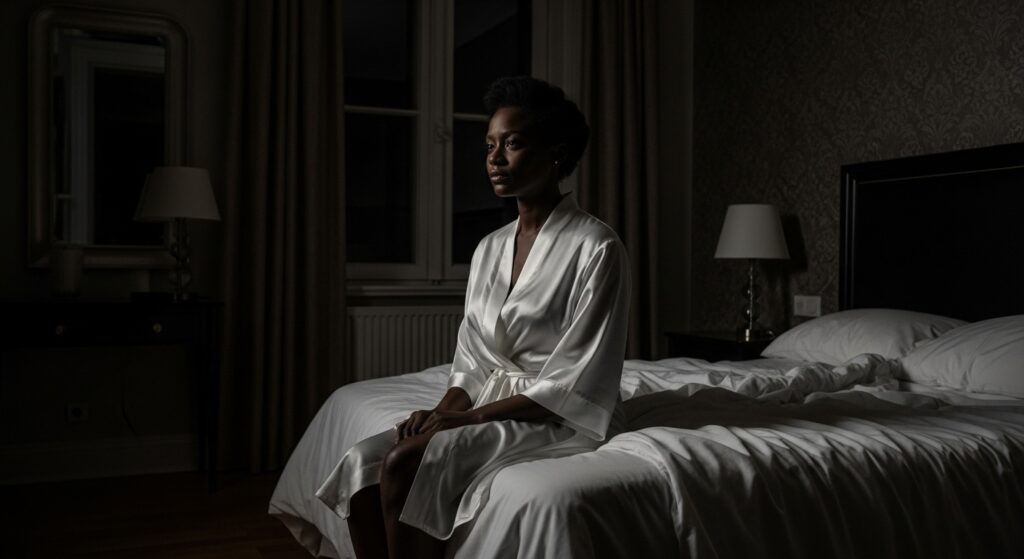
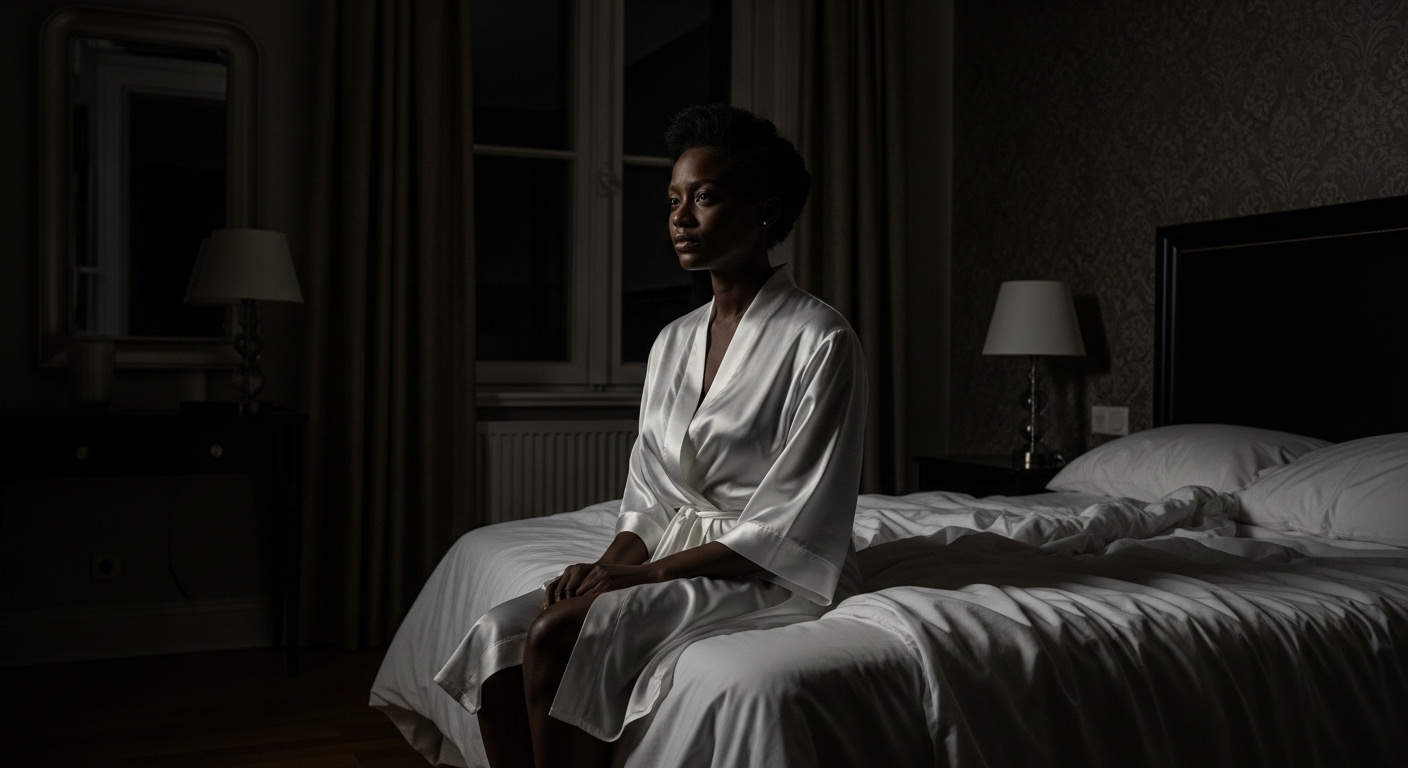
She laughs at all the right moments. She shows up to work on time. She posts pictures on Instagram with captions about gratitude and growth. From the outside, she looks fine. Maybe even thriving. But inside, she’s sitting in a room no one else can see—a room where the walls are made of things she can’t say out loud. Where the air is thick with questions she’s too afraid to ask. Where she replays what happened over and over, wondering if it was real, if it was that bad, if anyone would believe her if she tried to explain.
She’s wondering if anyone notices.
I think about women like this a lot. The ones who have learned to function while falling apart. The ones who’ve gotten so good at hiding their pain that even the people who love them most have no idea what’s happening beneath the surface. The ones who sit in meetings, at family dinners, in church pews, wondering if the screaming inside their heads is somehow audible to everyone around them.
There’s a particular loneliness that comes with surviving sexual or gender-based violence. It’s not just the isolation of what happened, it’s the isolation of carrying it. Of walking through the world with this knowledge about yourself, about what was done to you, that nobody else has. Of feeling fundamentally changed by an experience you’re not allowed to talk about.
I met a woman once at a wedding, and we were seated at the same table and chatted between servings. She was charming, funny. At some point in our conversation, she asked me: “Does it ever stop feeling like you’re the only person in the world who knows what really happened to you?”
I didn’t have a good answer then. I still don’t. Because the truth is, even when you tell people, even when they believe you, there’s still a part of the experience that remains yours alone. The specific weight of it, the particular way it changed you, the moments when it floods back, and you have to keep smiling because you’re in the middle of a conversation or a presentation or someone’s celebration.
She’s still carrying it, still showing up to weddings and laughing at toasts and wondering if anyone can tell that she’s only half present. That the other half of her is still stuck in that moment, trying to make sense of what happened, trying to figure out if she’s allowed to call it what it was.
The room these women sit in is not always quiet. Sometimes it’s loud with accusations they level at themselves. What did I do to make this happen? Why didn’t I fight harder? Why didn’t I scream? Why did I freeze? Why did I go back? Why did I stay? Why didn’t I know better?
I’ve watched women torture themselves with these questions. I’ve seen them replay moments from years ago, analysing every decision, every reaction, looking for the point where they could have changed the outcome. As if they were responsible for someone else’s choice to harm them. As if there’s a right way to respond to trauma that would have made it not count.
I know a woman who asks questions about therapy, about whether it’s normal to still have nightmares five years later, and whether she’s broken beyond repair. She never mentions details, but the shape of her questions tells me everything. She’s sitting in that room, and she’s been sitting there for years. And she’s not sure if leaving is even possible, or if the room has become so familiar that stepping out of it feels more terrifying than staying.
“Does anyone else feel like this?” she asked me once. “Or is it just me?”
It’s not just her. It’s never just her.
They’re all wondering if anyone notices. And the heartbreaking truth is, most people don’t. Not because they don’t care, but because survivors have learned to hide so well. Because we live in a world that rewards women for being okay, for not making people uncomfortable with their pain, for keeping their trauma packaged neatly away where it won’t disrupt anyone else’s day.
So they smile. They function. They show up. And inside, they’re screaming.
I think about what it costs to live like this, the energy it takes to maintain two versions of yourself, the one people see and the one you actually are. The exhaustion of constant vigilance, always monitoring your reactions, making sure you’re not revealing too much, and not letting the mask slip.
It’s not sustainable. But women do it anyway because the alternative, being visibly broken, feels more dangerous than breaking in private.
There’s a specific kind of invisibility that happens to SGBV survivors. People see them, but they just don’t see what happened. They don’t see the weight they’re carrying. They don’t see the room they’re trapped in. And because they don’t see it, they can’t understand why things have become so complicated.
Why can’t she just let it go? Why does she overreact to things that seem small? Why does she need so much reassurance? Why can’t she seem to trust anyone? Why did she build walls so high that nobody can get close? Why did she change?
She’s changed because something changed her, and she’s sitting alone with that change, wondering if anyone will ever understand, or if she’ll spend the rest of her life translating her trauma into language other people can tolerate.
I spoke with a therapist once who works primarily with SGBV survivors. She told me something that struck me. “The hardest part isn’t usually the trauma itself,” she said. “It’s the isolation that comes after. The feeling that you’re dealing with this enormous thing entirely alone. That’s what breaks people. Not what happened to them, but the loneliness of carrying it.”
That loneliness is compounded when survivors try to reach out and get met with responses that make them feel even more alone. When they’re told to pray about it, when they’re asked what they were wearing, when they’re advised to just move on, when they’re made to feel like their pain is an inconvenience or an overreaction or evidence of weakness.
So they stop reaching out, they go back to their rooms, and the isolation deepens.
There are woman who comments on the stories of those who share similar experiences to theirs on social media sometimes. They never share their stories; they just leave brief messages like “this helped” or “needed this today.” I once stumbled on the comment of one of them where she said: “How do you tell people you need help when you’ve spent so long convincing them you’re fine?”
I don’t know if she ever found an answer to that question. But I think about it often. Because that’s the trap, isn’t it? You perform okayness for so long that asking for help feels like admitting you’ve been lying. Like people will be angry at you for pretending, and you’ll lose whatever acceptance or normalcy you’ve managed to build.
But here’s what I want that woman to know. The one sitting in that room right now, reading this and feeling like I’m somehow describing her exact experience even though we’ve never met. You’re not as invisible as you think you are.
Some people have built their entire lives around noticing: Therapists who specialise in trauma, organisations that exist specifically to support survivors, and communities of other women who have sat in rooms just like yours and found their way out.
In Lagos, there’s the Domestic and Sexual Violence Agency. They notice. They’ve structured their entire operation around seeing what others miss, around creating pathways for women who aren’t sure how to ask for help.
Digital platforms are being built right now, like the one I’m working on, designed specifically for survivors who need support but can’t access it in traditional ways. For women who need anonymity, for women who need someone to talk to at 2 AM when the room feels smallest, for women who need to know they’re not alone without having to expose themselves to more judgment or harm.
These spaces exist because people notice. Because people understand that you’re sitting in that room. Because people are trying to build bridges between where you are and where healing is possible.
You don’t have to have it all figured out. You don’t have to be ready for therapy or reporting or any of the big steps that feel impossible right now. You just have to know that when you are ready, people are waiting. There are resources designed with you in mind, and there are communities that understand what it’s like to sit in that room.
I won’t lie and say it’s easy to reach out. It’s not. It’s terrifying. It means admitting that you’re not okay, that you need help, that what happened to you was real and it mattered, and it changed you. That’s a lot to carry to another person. But the alternative is carrying it alone forever. And you weren’t meant to do that.
The post Eva Funsho: Why Women Do Not Bother to Share Their Burdens appeared first on BellaNaija – Showcasing Africa to the world. Read today!.
She laughs at all the right moments. She shows up to work on time. She posts pictures on Instagram with captions about gratitude and growth. From the outside, she looks fine. Maybe even thriving. But inside, she’s sitting in a room no one else can see—a room where the walls are made of things she
The post Eva Funsho: Why Women Do Not Bother to Share Their Burdens appeared first on BellaNaija – Showcasing Africa to the world. Read today!. Read More