By Steuart Pennington
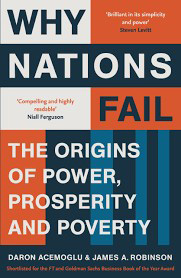
I did some thinking about the 10 most important developments in SA over the past year, across our economy, infrastructure, social policy, and global standing. I selected these because together they hint at a country working to overcome long-standing challenges and build more stable institutions and opportunities. I’ve been very influenced by the book “Why Nations Fail” and the emphasis the authors put on ‘institutional health’, both political and economic, differentiating ‘extractive’ institutions from ‘inclusive’ institutions. Below is evidence of a move towards more ‘inclusive’ institutions, notwithstanding the fact that EWC, NHI, BEE, BELA, 143 Race Laws are clear examples of a sinister move to roll back exiting ‘healthy institutions’ and re-establish them as ‘extractive’ institutions.

1. Credit-rating upgrade lifts confidence in economy
Late in 2025, S&P Global upgraded South Africa’s long-term foreign-currency sovereign credit rating from “BB-” to “BB,” the first such upgrade in nearly two decades. The upgrade reflects improved fiscal discipline, a narrowing budget deficit, better performance at state-owned enterprises (especially in energy), and more stable debt dynamics, boosting investor confidence and raising the prospect of further upgrades if progress continues.
2. Major investment in infrastructure and energy
The government committed over R1 trillion across the next three years to renew infrastructure in transport, water, energy, and logistics, a signal that the state is prioritizing long-overdue upgrades.
In the same period, new energy capacity was added, including a 100 MW solar-power facility and increases to grid capacity, and private sector investment in renewable energy surged, easing pressure on the national grid and expanding access to cleaner energy.
3. Momentum behind structural reforms (Operation Vulindlela)
The reform plan known as Operation Vulindlela is gaining traction. In its second phase initiated around mid-2025, it is unlocking growth via improved logistics, energy, digital infrastructure, and public-sector capacity, ultimately aiming to raise long-term growth and create jobs. In the most recent labour data, the formal non-agricultural sector saw a modest employment increase, a sign that the reforms are having early-stage impact.
4. Expansion of the digital economy and tech investment
In 2025, Microsoft South Africa committed R5.4 billion to build AI infrastructure locally, strengthening the country’s capacity as a tech hub in Africa. Meanwhile, digital services, business-process outsourcing, and creative industries continued to expand. In the government’s 2025 “State of the Nation” outline, these sectors are now the largest part of the economy, offering new kinds of employment, especially for youth.
5. Boost to small businesses, entrepreneurship and youth employment
New policies are targeting economic inclusion. A transformation fund and reformed procurement policies are being introduced to channel more opportunities into businesses owned by historically marginalised groups, including black South Africans, women, youth, and persons with disabilities.
Additionally, support for SMEs and an emphasis on informal economy enterprises recognise the importance of small-scale business in creating livelihoods and stimulating grassroots economic growth.
6. Growing tourism and a rebound in services
Tourism, always a strong suit for South Africa, rebounded strongly: last year, nearly nine million tourists visited the country. This rebound, together with growth in hospitality, retail, financial services, and other service sectors, is helping diversify the economy away from reliance on commodities and manufacturing.
7. Policy push toward green economy and natural-resource benefit
The government has committed to expanding renewable energy, green manufacturing, and sustainable use of South Africa’s natural wealth, especially around “green economy” pathways such as renewable energy, agriculture, and mineral beneficiation. At the same time, reforms to mining-rights frameworks and regulatory transparency aim to ensure that mining, a mainstay of the South African economy, works to the broader benefit of citizens, rather than deepening inequality.
8. Momentum toward climate-change readiness and sustainable planning
In 2025, the government formally proclaimed the Climate Change Act, 2024, a key step that paves the way for comprehensive climate policy, transition to a low-carbon economy, and climate adaptation plans across sectors. With many climate and green-economy initiatives now backed by legislation and infrastructure investment, South Africa seems poised to take more meaningful action on climate risks, a long-term win for people and the environment.
9. Increased international investment and deeper global integration
Beyond Microsoft’s commitment, South Africa is attracting broader foreign investment, strengthening its integration into global supply chains and value-chains. The government has emphasised public-private partnerships especially in logistics and freight to unlock export-growth potential. This broadening of investment, including in technology, mining, infrastructure and services, signals greater global confidence in South Africa’s direction, which could help sustain growth and innovation for years to come.
10. Foundations laid for more inclusive growth and long-term structural transformation
Taken together, the reforms, investments in infrastructure, focus on technology, small business, green economy, and diversification of the economy indicate a conscious push toward a more inclusive, resilient and diversified South Africa. Government strategy now seems more about transforming the structural basis of the economy: making sure opportunities reach previously excluded groups (youth, women, small business owners, rural communities), while improving energy and logistics systems that underpin broad economic participation. If these trends hold, the seeds being planted now could pay dividends over the coming years in poverty reduction, job creation, and better quality of life for many South Africans.
And of course the Springboks won the Rugby Championship and the Proteas beat India!
Why this matters
For many years, South Africa has struggled with weak growth, frequent energy crises, high unemployment, inequality and structural economic challenges. What stands out about the past year is that multiple levers, policy reform, investment, infrastructure, green-economy orientation, and global interest, are pulling in the same direction. Rather than isolated good news, what we see is an emerging systemic shift: from stop-gap crisis management toward purposeful transformation. If sustained, this could mark the beginning of a more stable, opportunity-driven phase for the country. Of course challenges remain, including inequality, unemployment, and ensuring that the benefits of growth are broadly shared, but the foundations now appear stronger than in many recent years.
The post What were the 10 most important Developments in SA during 2025? appeared first on The Home Of Great South African News.
And of course the Springboks won the Rugby Championship and the Proteas beat India!
The post What were the 10 most important Developments in SA during 2025? appeared first on The Home Of Great South African News. Read More