Consuming bone broth is more than a health fad. Although it has recently become fashionable to drink, the recipe is an ancient supplement that truly nourishes. Long before the Gwyneth Paltrows of the world made it popular, communities around the globe understood the nutritional value of this liquid. And now it’s being revived by a women-led business from the Eastern Cape.
Bone broth, as the name suggests, is made from animal bones. The process involves simmering the discarded bones and connective tissue, usually what is left after processing slaughtered cattle. This extracts the dense nutrients, resulting in a liquid that is packed full of beneficial proteins, amino acids, and minerals, and that benefits joint, gut, and skin health.
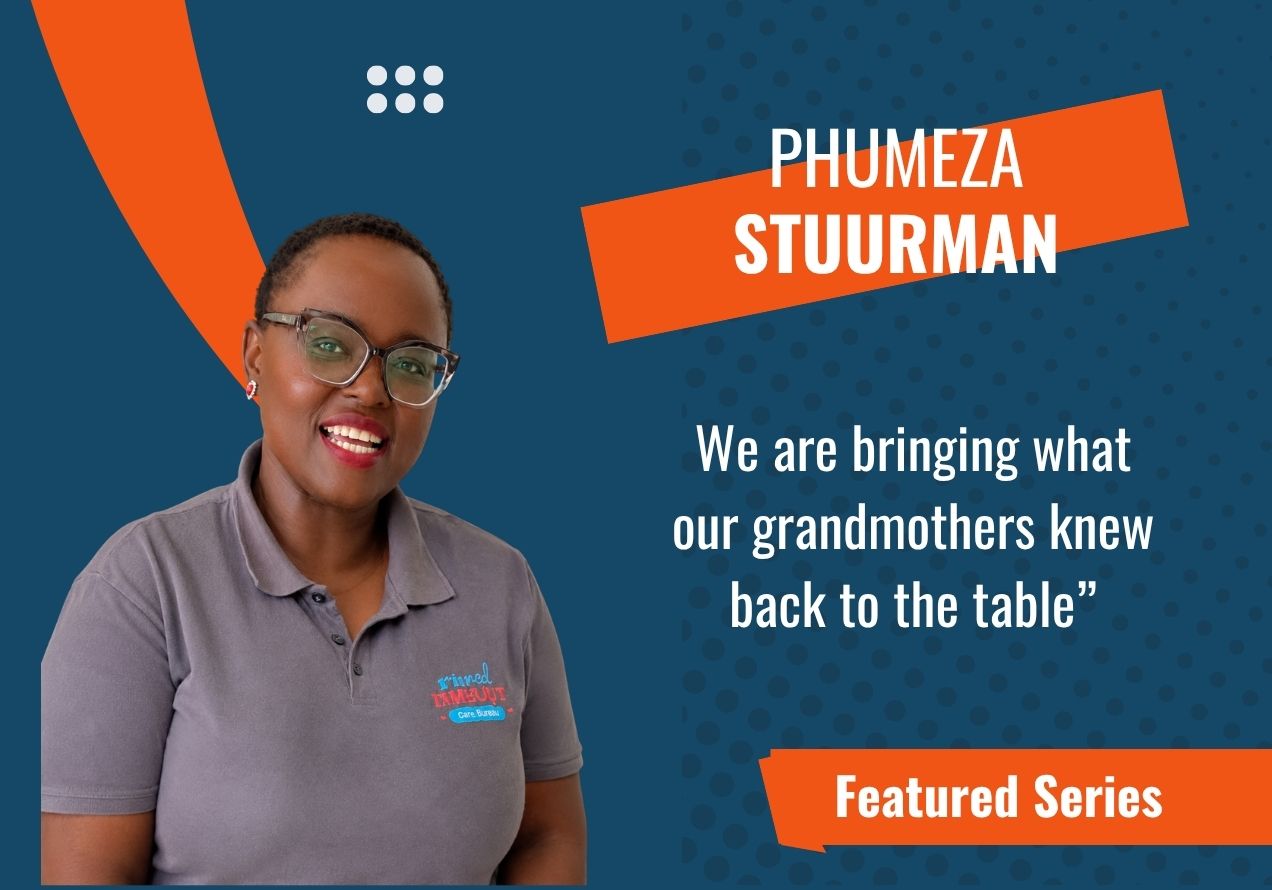
On the outskirts of East London, Phumeza Stuurman is reviving traditional practices by offering this heritage-inspired wellness product to customers in the Eastern Cape. She founded Rural Impaqt Bone Broth as a means to generate an income during a challenging time in her life, when her health was suffering, and her previous business couldn’t recover after the pandemic
“After my business could not recover from the pandemic, I became more intentional about my prayer,” Stuurman admits. “I always prayed for a business idea or strategy that I could produce at my home in Nxarhuni, but that was also scalable nationwide, even internationally.” This was also a desire she had when she launched her first business back in 2025, but Rural Impaqt Bone Broth was the answer to her prayers.
“I was financially challenged, yet inspired by the African term ‘vukuzenzele’, meaning ‘wake up and do it yourself’, and I had to think of what I could do with the little I had that also had the potential to grow to something greater.”
Interestingly, Stuurman’s business interests have always been luxury- or lifestyle-oriented. Therefore, it was no surprise that investigating and researching what need her business could fill regarding food would lead her to producing a superfood. “My health was bad at that time. I suffered from fibroids, my energy levels were very low, and my joints were very weak. I could not work. Two surgeries later, I remembered my grandmother’s bone broth, which is good for joints and pain,” she recalls. Eventually, her health improved, and Stuurman realised that many other people could benefit from heritage wellness, as she calls it.
Transferable Skills for Entrepreneurship
Long before she started her entrepreneurial journey, Stuurman had a successful career in the public sector for over 15 years in Gauteng. Her roles covered many areas, such as financial management and performance monitoring and evaluation. During that time, she obtained an MBA degree – knowledge that she finds handy now when strategising and planning in her business.
However, family responsibilities required her to move back to the Eastern Cape.
Her career in the public sector definitely prepared her for the realities of being an entrepreneur.
“Some obvious transferable core skills include finance, strategy, and project management, but there were also capabilities I took for granted and thought were common to all,” she shares. “These include systems and processes, stakeholder engagement, work ethic and compliance.
“The reality is that I carry the project from ideation to implementation. There are no human resource-, information technology-, or communications departments that run some of the milestones, and no budget allocated by the National Treasury – I am my own National Treasury.”
Scaling from a Home-based Micro-factory
Stuurman and her three part-time employees currently use her home kitchen as a micro-factory for small-batch production. The business is promoted on social media, and she takes orders on WhatsApp for weekly deliveries to collection points in Beacon Bay and Vincent in East London, in addition to selling at local markets.
“We are at the infancy stage of the business, but we have been formalised since September 2025 after spending about 9 months on research and product development. As much as the limited capacity slows down progress, we appreciate this time to take lessons and continuously improve our systems and processes.
“Our main challenge is access to funding for the manufacturing facility, which is mainly for equipment that can extend the shelf life of bone broth, as we want to remain a preservative-free product, and compliance and accreditation that will open doors to like-minded retailers.
She explains that she is navigating funding opportunities, especially impact investors, as she also wants to keep their values of “purpose and profits”.
The chicken and beef broths are slow-cooked over open fires in the traditional African way, maximising nutritional value.
“We are bringing what our grandmothers knew back to the table in a format that meets modern food safety standards and consumer desires to live well and eat well.
“Our vision is not just to build a food brand but to grow a rural manufacturing ecosystem, based on a commercially viable, scalable business that uses health food as a vehicle for rural economic transformation – creating dignified local employment, activating local supply chains, and demonstrating that high-value health food production can happen outside of urban centres,” Stuurman notes.
The long-term vision for the rural manufacturing ecosystem she is building in Nxarhuni is as follows:
- She wants her bone broth to be a household name in South Africa, Africa and internationally.
- She wants to introduce other heritage-inspired wellness products.
- She wants to restore the dignity of rural communities and bring hope to the youth that you do not need to move to the cities to make it in life.
- She wants to restore families because most rural households are child-headed because parents have to work in the cities.
- She wants to enable skills transfer: She intends to replicate the rural manufacturing ecosystem in Nxarhuni in other rural communities (looking at what the area possesses and how they can make it a household product).
Joining the Small Business Academy
Stuurman is a participant in the second edition of the East London programme of the Stellenbosch Business School’s Small Business Academy (SBA), a partnership with Standard Bank and the Border-Kei Chamber of Business in East London.
She saw the SBA as an opportunity to network with like-minded entrepreneurs and learn “from those who have walked the road for a while”, and learn from and be mentored by business experts.
“The SBA is an opportunity to equip myself to think big and scale the business, to learn to work on the business, not just in the business,” she explains.
“It was like a reset button which came with a manual for rewriting the roadmap. It was not just an academic programme that takes you through frameworks and theories but practical case studies based on businesses of the facilitators and my fellow students.”
She continues to add that the social capital gained cannot be measured, such as the networks built with her fellow business owners and stakeholders introduced by the programme.
“The business growth and brand equity that Rural Impaqt Bone Broth gained through the programme is something we could not even dream of for the first 5 years of the business, but through this opportunity, we obtained them within a few months.”
Consuming bone broth is more than a health fad. Although it has recently become fashionable to drink, the recipe is an ancient supplement that truly… Read More