
Essential Digital Literacy Skills for Youth in 2026
 No one can argue the importance of digital literacy…but it’s especially critical for children. In a world where almost everything can be done via the phone in one’s pocket, kids that don’t have a foundational understanding of digital learning will be left behind.
Nowhere is this more true than in rural East Africa
This year, International Youth Day is August 12, 2026. By UNESCO’s own estimates, 40% of today’s skillsets (in the developed world) no longer match job market needs. Combine that already grim number with the fact that rural children often don’t have regular access to the internet, school or devices on which to learn. It means they will be afterthoughts when it comes to global “future of work” conversations (AI, digital transformation) if digital literacy isn’t in place first.
Digital Literacy is a Prerequisite, Not a Luxury
At Asante Africa Foundation we’ve been doing our best (along with many communities and strategic partners) to empower rural East African children to acquire the digital skills needed to become successful students and entrepreneurs. As a result, we’re intimately acquainted with how and why rural East Africa is at risk of being left behind:
-
-
- Only 28% of the Sub-Saharan population are connected to the internet, and youth in rural areas broadly lack access to and knowledge of digital tools
- Only 65% of teachers have the minimum required qualifications in rural East Africa
-
Statistics like these make it tough to live up to the standards of International Youth Day: such as building AI-era or green-economy skills. It’s why digital literacy skills have to be ingrained at the primary level.
For youth in 2026, foundational digital literacy encompasses a mix of
-
-
- Device/tool use
- Literacy/numeracy via tech (and applied in the classroom)
- The ability to employ digital skills in pursuit of entrepreneurship and practical income generation
-
Asante Africa’s Accelerated Learning Program Helps Impart Digital Literacy
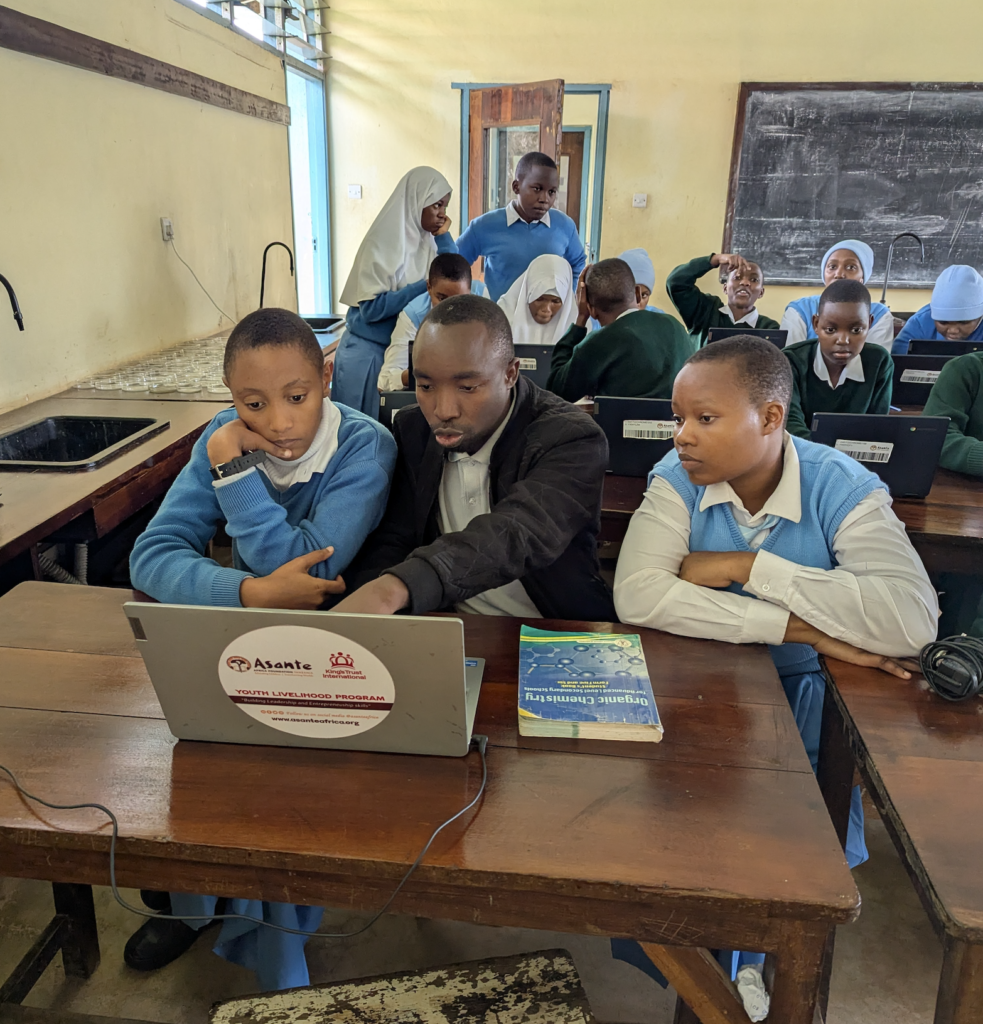
Asante Africa’s Accelerated Learning Program lays the groundwork to help hundreds of children get the materials and knowledge they need to make strides on digital literacy. By strengthening literacy and digital skills through hands-on tech learning – and providing scholarships that remove financial barriers – Kenyan, Ugandan and Tanzanian students gain the tools and access they need to achieve, stay in school and succeed in life.
 Moreover, the Msingitek initiative, implemented by Asante Africa Foundation-Tanzania in partnership with Imagine Worldwide, delivers high-quality literacy and numeracy education through tablet-based learning in early-grade classrooms.
In 2025, the program moved from pilot to school-level implementation, equipping communities, teachers, and students with the infrastructure and skills for sustained digital learning.
Through the Msingitek initiative
- 10 schools have been equipped with solar power and secure tablet storage
- 24 teachers have been trained (an even mix of 12 male and female teachers)
- 1,209 tablets have been deployed
- 2,863 children (Standard 1-3) have gained tablet-based literacy and numeracy skills
Beyond primary learning, our Digital Employability and Entrepreneurship Program (DEEP) helps youth transfer digital skills from the classroom to create their livelihood. Program efficacy in 2025 was significant, with a 300% increase in digital apprentices’ monthly income. Also, 95% of students started personal side businesses, a healthy example that digital literacy in the classroom directly leads to economic empowerment, a theme that resonates with this International Youth Day.
Digital Literacy Skills for Youth Echo the UNESCO Mandate
UNESCO recognizes International Youth Day as an opportunity to convene stakeholders and interested parties in children’s education to have a global conversation on skill-building.
It’s widely understood that the more we can empower children with the skills they need to thrive as young businesspeople and entrepreneurs, the more inclusive, peaceful, and sustainable societies become.
We strongly believe our Accelerated Learning Program’s “Pay it Forward” model – where children pass on the skills they’ve learned to the next class – can serve as a template (and success story) for locally-sourced and decentralized learning.
The early investment in digital literacy is an effective way to prevent the skill mismatch in the job market that currently exists.
To honor the fight for digital literacy this International Youth Day, we ask that you consider doing what you can to help. That can be funding a classroom, sponsoring teacher training, or reinforcing the Pay-it-Forward model by supporting a scholar. There’s no better way to get involved for a shared future!
What is the Accelerated Learning Program?
ALP accelerates learning in the classrooms through hands-on training, leveraging digital tools and localized learning resources enabling high-quality outcomes. LEARN MORE
Why are digital literacy skills important for youth in 2026?
Digital literacy is essential because it equips young people with the skills they need to learn, communicate, solve problems, and access future employment opportunities. As AI and digital technologies continue to reshape the workforce, foundational digital skills are becoming a prerequisite for success. For youth in rural East Africa, early access to digital learning helps close education gaps and prepares them for future careers and entrepreneurship.
What are the most important digital literacy skills for children?
Foundational digital literacy includes learning how to use digital devices, building literacy and numeracy through technology, practicing online safety, and developing problem-solving skills using digital tools. As students grow older, these skills expand to include entrepreneurship, coding, digital communication, and using technology to generate income and employment opportunities.
How is Asante Africa Foundation improving digital literacy in East Africa?
Asante Africa Foundation strengthens digital literacy through its Programs and initiatives across East Africa. These programs provide tablets, coding, basic and advanced computer skills, solar-powered learning environments, teacher training, and technology-based literacy and numeracy education. Beyond primary school, the YLP Program takes digital learning to the next level. Students learn how to create businesses and encorporate technology to improve them. The Digital Employability and Entrepreneurship Program (DEEP) initiative helps young adults apply digital skills to employment, business creation, and economic independence.
How can I support digital literacy for children in East Africa?
Every Asante Africa Foundation program incorporates digital learning, from introducing young children to technology through tablet-based literacy and numeracy lessons to equipping older students with digital, entrepreneurial, and employability skills. By supporting Asante Africa Foundation, you’re helping expand access to technology, strengthen digital education, train teachers, provide scholarships, and prepare young people with the skills they need to thrive in an increasingly digital world. Your support helps build a future where every child has the opportunity to learn, adapt, and succeed.