
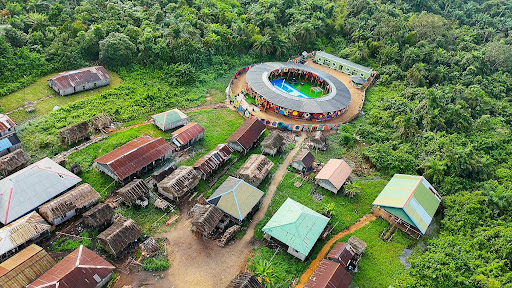
For generations, children in Saga island, a remote fishing community in Epe, Lagos, grew up without access to a formal school. Today, that same community is home to one of the world’s most celebrated schools. A recognition which has placed a community once overlooked, on the global education map and affirms that transformative ideas can emerge from the places the world least expects.
Slum2School Green Academy has been named among the Top 10 Schools in the World in the Environmental Action category of the World’s Best School Prizes, organised by T4 Education alongside its global partners.
Where It All Started
During a medical outreach in a remote riverine community several years ago, the Slum2School team encountered Jennifer Williams, a young girl who had been out of school for years while battling a serious health condition.
After receiving treatment, Jennifer was determined to return to school. Yet even after overcoming her health challenges, she faced another barrier: finding a school willing to admit her. With the support of Slum2School and a partner school, Jennifer eventually gained admission, excelled academically, and went on to receive awards for academic excellence and leadership. Her journey was a powerful reminder of what becomes possible when a child is given an opportunity.
But it also exposed a much larger challenge. Jennifer’s community was filled with children who wanted to learn but had no school within reach.
The question became bigger than helping one child find a school. What would it take to bring education to an entire community?
From a Dream to a Long-Term Commitment
By 2019, the vision of building a permanent learning environment for children in Jennifer‘s community had already begun to take shape, but the years that followed were not years of waiting.
While the long-term vision was taking shape, Slum2School continued working with children and families in the community, providing educational support through volunteer-led learning, makeshift classrooms, school supplies, learning materials and other interventions designed to keep children connected to education. These efforts became an important bridge between what the community had and what it needed. They provided children with opportunities to learn while a more permanent solution was being imagined.
The experience also helped Slum2School understand that building a school was not simply about putting up classrooms. It meant creating an environment designed around the realities of the community and the future its children would inherit.
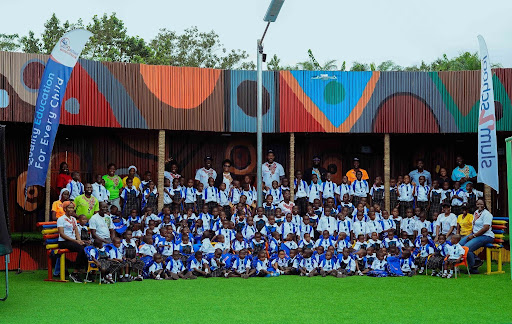
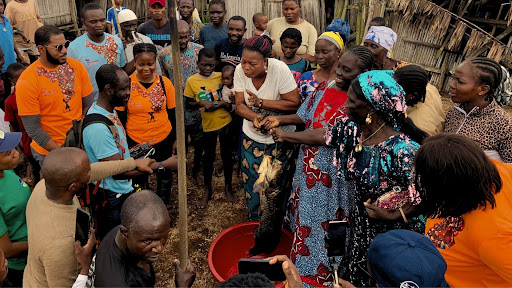
In 2024, that long-held vision finally began to take physical form. With 3,000 square metres of land donated by the community, construction began on what would become the Slum2School Green Academy. At the time, 250 children from 8 neighbouring communities were already waiting for the opportunity to attend a school within their own community.
Building a School for the Future
The Green Academy was designed around a simple but ambitious question:
What should a school look like when it is built not only for children who have historically been left behind, but for the future they will inherit?
The answer was a learning environment where sustainability, innovation, technology and community ownership could exist side by side.
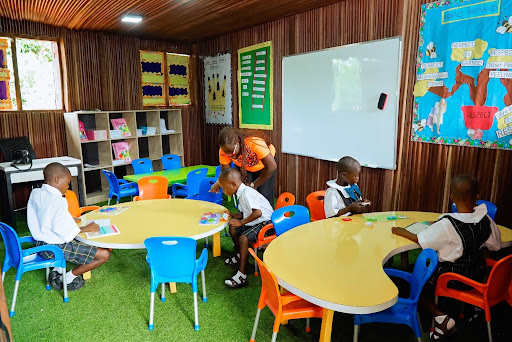
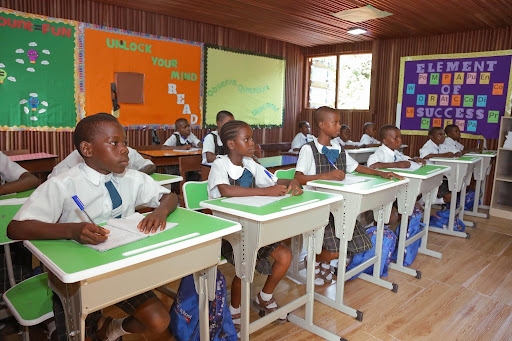
The Academy was created by Slum2School to be more than a school building. It was designed to incorporate environmentally conscious infrastructure, solar-powered energy systems, digital classrooms equipped with interactive smart boards, and spaces that encourage STEM learning, exploration, creativity, collaboration and skills development.
Its use of locally sourced and environmentally conscious materials reflects an approach to infrastructure that considers both environmental impact and the realities of the community it serves.
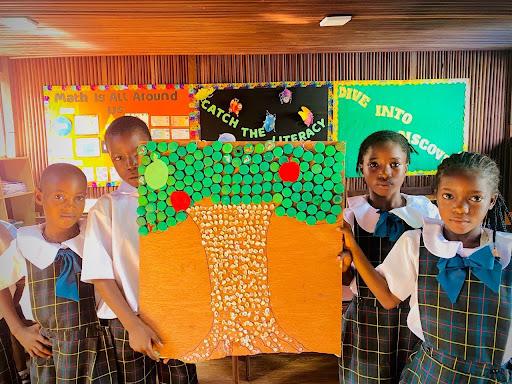
But sustainability at Green Academy was never intended to stop at the building. It is woven into the culture of the school, shaping how learners think about their environment, solve problems, and become responsible citizens who understand their role in protecting the world around them.
Where Sustainability Meets Learning
Environmental action at Green Academy is not an isolated project or a lesson taught once a week. It is embedded into the very design and daily life of the school. Constructed using environmentally conscious materials and powered by renewable solar energy, the Academy was intentionally designed to reduce its environmental footprint while creating a healthier, more resilient learning environment. Natural ventilation, green building principles, and sustainable infrastructure demonstrate that schools can be both environmentally responsible and deeply functional.
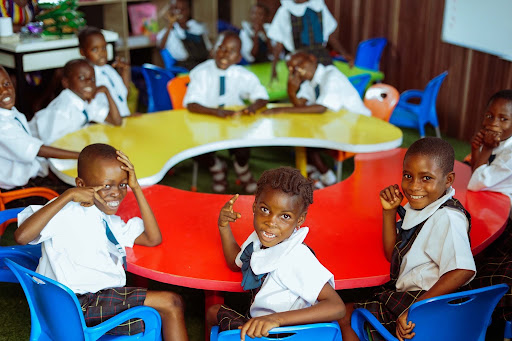
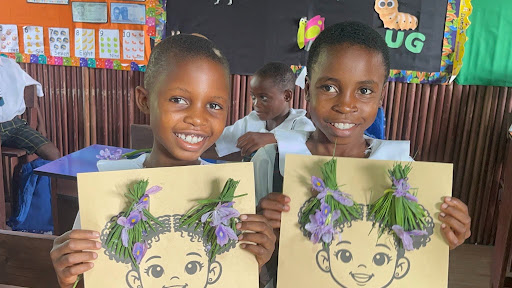
Inside the classrooms, learners engage with interactive and digital learning tools that connect them to a global curriculum while remaining grounded in local realities. Learners receive more than academic instruction. They develop leadership skills, participate in arts and sports programmes, access psychosocial support, and build the confidence needed to pursue opportunities far beyond their immediate environment.
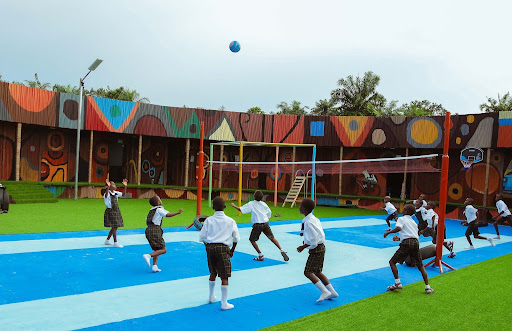
Beyond the classroom walls, sustainability becomes a lived experience. Learners are encouraged to think critically about climate, conservation, and responsible citizenship, understanding that protecting their environment is inseparable from building stronger communities. For a riverine community already experiencing the realities of climate vulnerability, environmental action is not simply an aspiration. It is essential.
This holistic approach recognises that education is not simply about passing examinations. It is about raising young people who can think critically, lead compassionately, and contribute meaningfully to society.
The Power of Community
One of Green Academy‘s greatest strengths is that it belongs to the community as much as it belongs to the children. Parents, volunteers, educators, and community leaders all play active roles in shaping the learning experience. Rather than delivering education to a community, Slum2School works alongside communities to build systems that can be sustained and strengthened over time.
This collaborative model has helped create an environment where children are supported not only inside the classroom but throughout their educational journey.
It is a reminder that meaningful change happens when communities are empowered to become partners in the solutions that affect them.
From Saga to the World
The World’s Best School Prizes recognise schools that are redefining education through innovation, community collaboration, environmental action, support for healthy lives and overcoming adversity.
Being named among the Top 10 Schools in the World for Environmental Action places Green Academy alongside schools demonstrating some of the most innovative approaches to education globally.
But perhaps the most significant part of the recognition is where the story began.
A community once overlooked because of its remoteness is now part of a global conversation about what the future of education can look like.
Green Academy demonstrates that educational innovation does not have to originate in a major city or a highly resourced institution. It can emerge from a fishing community in Lagos, shaped by the people who live there and designed around the realities they understand best.
It is a reminder that when communities are given the opportunity to participate in creating solutions, local ideas can have global relevance.
A Model For What Comes Next
The recognition of Green Academy is an important milestone, but it is also a glimpse into a much larger vision.
For Slum2School Africa, the Academy represents the kind of learning environment that can be adapted, strengthened and expanded as the organisation works towards its broader vision for transforming education access for children in hard to reach and underserved communities. It is not the destination. It is another step toward a future where every child, regardless of where they are born, has access to safe, inclusive, sustainable, and high-quality education.
The ambition is not simply to build more schools, but to continue developing learning ecosystems where quality education, sustainability, technology, wellbeing and community ownership reinforce one another.
Green Academy offers a glimpse of what that future can look like. Its journey from a community without a formal school to a learning institution recognised among the world’s best for environmental action is not only proof that transformation does not happen overnight; It is built through years of listening, learning, supporting communities and refusing to give up on what is possible and also proof that investing in children creates lasting change, not only for individual learners but for entire communities and, ultimately, for the future of education itself.
And while the Top 10 recognition celebrates how far Saga has come, the story of Green Academy is ultimately about where education can go next.
To explore the Green Academy’s journey, environmental innovations and its recognition in the World’s Best School Prizes and Slum2School’s work, learn more here.
BellaNaija is a Media Partner for Slum2School
The post How Slum2School Green Academy Became One of the World’s Best Schools for Environmental Action appeared first on BellaNaija – Showcasing Africa to the world. Read today!.
For generations, children in Saga island, a remote fishing community in Epe, Lagos, grew up without access to a formal school. Today, that same community is home to one of the world’s most celebrated schools. A recognition which has placed a community once overlooked, on the global education map and affirms that transformative ideas can
The post How Slum2School Green Academy Became One of the World’s Best Schools for Environmental Action appeared first on BellaNaija – Showcasing Africa to the world. Read today!. Read More