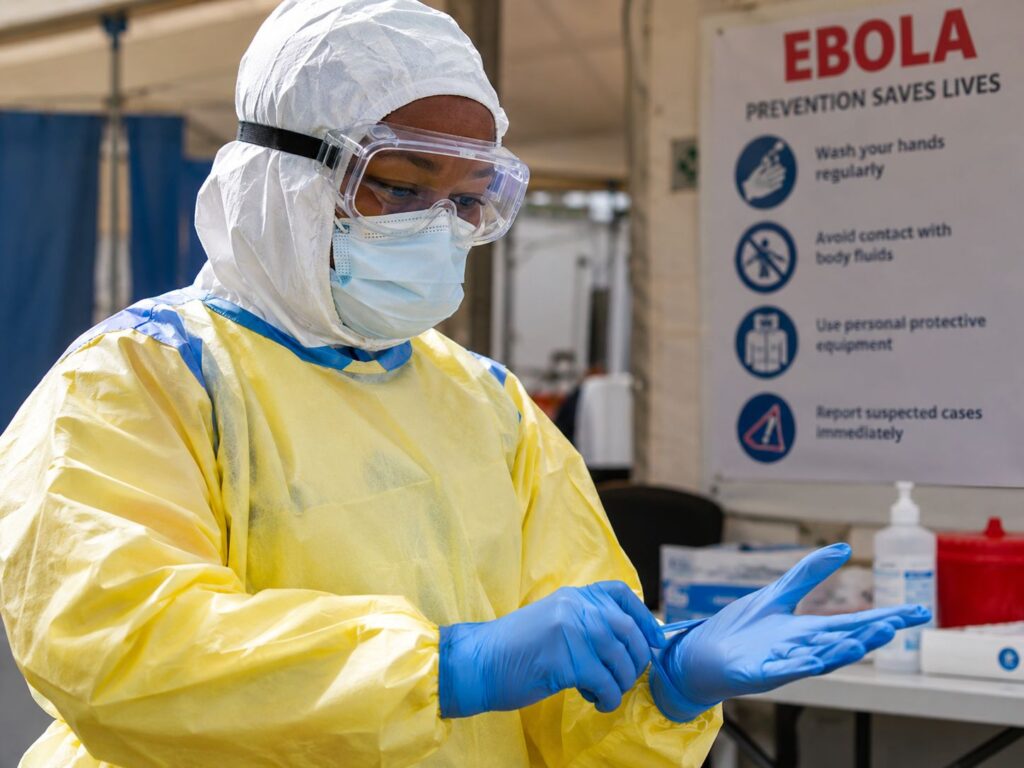
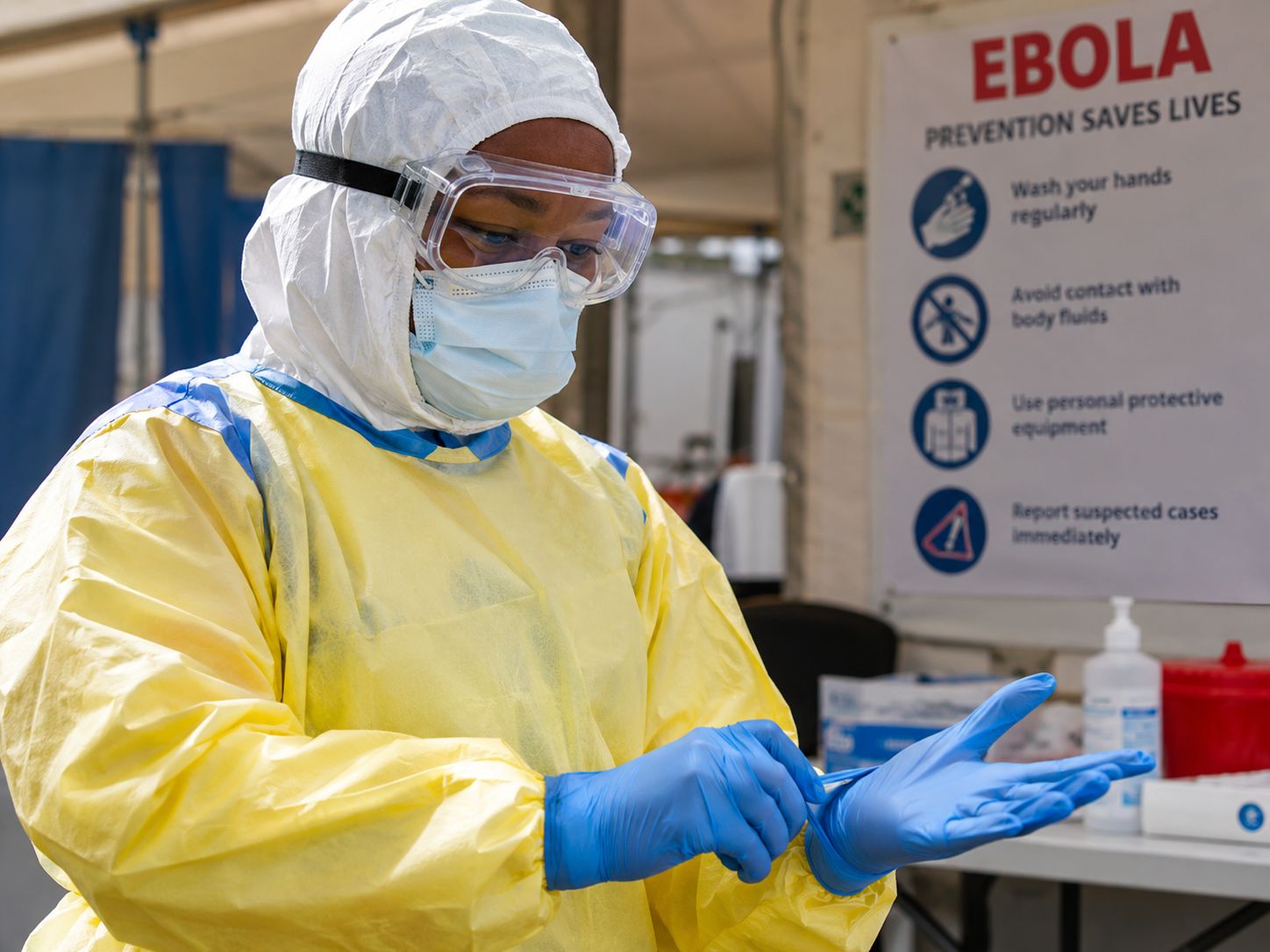
PPE Preparation in an Ebola Clinic. Generated Image.
Yesterday, October 20, 2026, the Nigeria Centre for Disease Control and Prevention (NCDC) announced the confirmation of the first Ebola virus disease case in Abuja. While the federal government and the NCDC have continued strengthening surveillance and response efforts to prevent its spread, it is important for Nigerian citizens to also stay alert, safe and take preventive measures.
According to the NCDC, “Ebola virus disease (EVD), also known as Ebola hemorrhagic fever (EHF), is a severe disease of humans and other primates caused by an RNA virus of the family Filoviridae and genus Ebola virus. The disease has a high fatality rate, killing between 25%-90% of those infected. Research conducted in 2005 suggested fruit bats to be the likely reservoir due to their ability to spread the virus without being affected by it.
The largest outbreak to date took place in West Africa between March 2014 and June 2016, affecting Guinea, Liberia, Sierra Leone, Senegal, and Nigeria primarily. A total of 11,296 cases were recorded, including suspected and probable cases.”
The first-ever case of Ebola in Nigeria was confirmed in Lagos on 23 July 2014, and with its high fatality rate, citizens need to understand how to protect themselves before the government’s intervention.
According to the Federal Ministry of Health and Social Affairs, here are how you can protect yourself from Ebola virus disease:
Advice to Nigerians
Nigerians are advised to:
- Practice good hand hygiene. Wash your hands regularly with soap under running water or use hand sanitisers when soap and water are not readily available.
- Avoid physical contact with anyone who has symptoms of an infection with an unknown diagnosis.
- Reduce the risk of wildlife-to-human transmission from contact with infected fruit bats or monkeys/apes and the consumption of raw meat. Animals should be handled with gloves and other appropriate protective clothing. Animal products should be thoroughly cooked before consumption.
- Avoid direct contact with the blood, saliva, vomit, urine and other bodily fluids of suspected or confirmed EVD cases.
- If you or someone you know (with a travel history to any country with Ebola cases) experiences symptoms of EVD enumerated above, call 6232 or your State Ministry of Health hotline IMMEDIATELY for guidance.
Advice to Healthcare Workers
Healthcare workers:
- Are advised to maintain a high index of suspicion for EVD in their encounter with their patients
- Ensure strict isolation of the patient(s).
- Adhere strictly to infection prevention and control (IPC) measures, including the use of appropriate personal protective equipment (PPE) like face masks, hand gloves, appropriate gowns, safe sharps disposal and others.
- Report suspected cases immediately to the NCDC or State Ministry of Health for appropriate response and management.
Advice to Travellers
Travellers are advised to:
- Shelter-in-place to avoid further spread through shared transport systems (public or private) until health authorities reach out.
- Await dedicated responders for assessment and possible transport to a designated treatment centre if required.
Ebola symptoms can vary, but the most commonly experienced symptoms at the beginning of the disease include a sudden onset of fever, intense weakness, muscle pain, headache, and a sore throat. As the disease progresses, other symptoms may develop, such as vomiting, diarrhea and jaundice (yellowness of the eyes).
In severe cases, individuals may experience uncontrolled bleeding from body orifices and dysfunction or failure of several organs, including the kidneys, liver, and central nervous system. This can lead to shock and, ultimately, death. In fatal cases, death often occurs between 8 and 9 days after the onset of symptoms.
Please contact NCDC for more enquiries or to report a suspected case on the toll-free number: 6232.
Stay safe, Nigerians.
The post How to Protect Yourself From Ebola Virus Disease appeared first on BellaNaija – Showcasing Africa to the world. Read today!.
Yesterday, October 20, 2026, the Nigeria Centre for Disease Control and Prevention (NCDC) announced the confirmation of the first Ebola virus disease case in Abuja. While the federal government and the NCDC have continued strengthening surveillance and response efforts to prevent its spread, it is important for Nigerian citizens to also stay alert, safe and
The post How to Protect Yourself From Ebola Virus Disease appeared first on BellaNaija – Showcasing Africa to the world. Read today!. Read More