
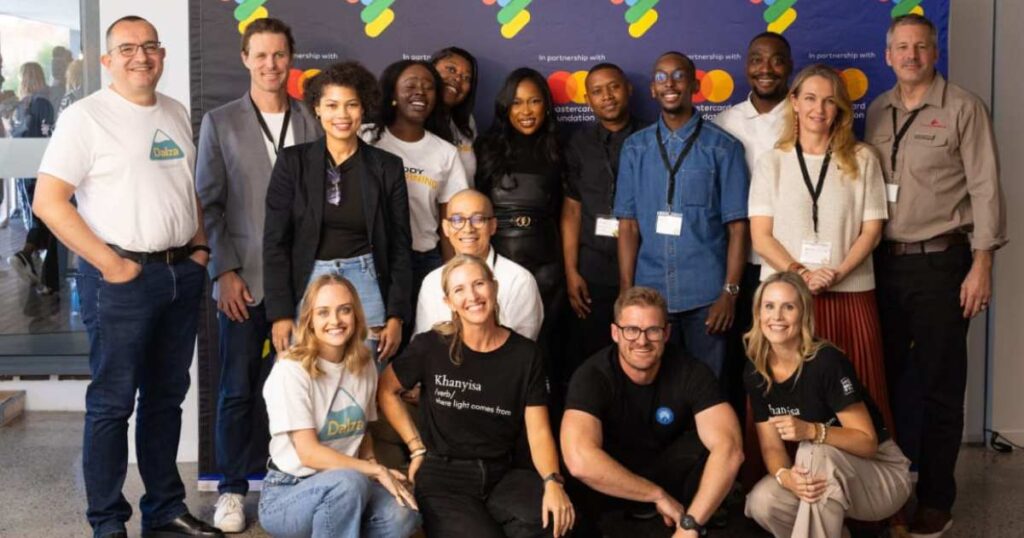
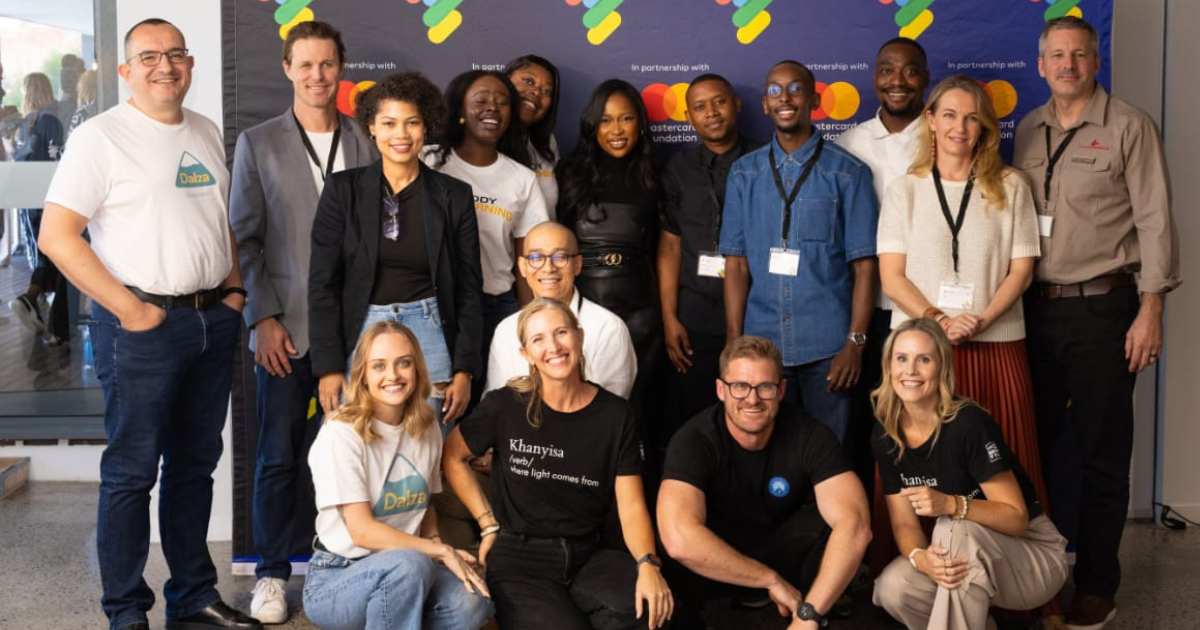
The Mastercard Foundation, in partnership with EdTech accelerator Injini, have announced the ten EdTech companies joining the 2026 Mastercard Foundation EdTech Fellowship. The selected ventures will participate in a specialised six-month acceleration programme designed to scale their impact and improve educational outcomes for all learners.
According to the statement, the new cohort includes a diverse range of offerings, from solutions that support learners with barriers to learning to organisations that provide literacy and numeracy software for special needs learners to low-data platforms designed for rural accessibility. Each Fellow has been selected for their potential for impact and dedication to dismantling barriers to quality education.
What is the Mastercard EdTech Fellowship?
The Mastercard Foundation EdTech Fellowship Program is a six-month, equity-free acceleration program for high-impact companies using technology and innovation to address challenges in South African education.
How the Programme Works
This year, the programme will deliver various forms of support from Injini, including:
- Mentorship from experts in assistive technology, teaching innovation, capital raising, commercial strategy and impact measurement.
- Global quality assurance via formal pedagogical evaluation and certification from Education Alliance Finland and EdTech Impact.
- Specialised market insights provided by Injini’s team of education researchers to help navigate the regional landscape.
- Specialised market insights provided by Injini’s team of education researchers to help navigate the regional landscape.
“Technology is accelerating how education can reach those who have historically been excluded,” added Wariko Waita, Director, Centre for Innovative Teaching and Learning at the Mastercard Foundation. “The EdTech Fellowship sits at the intersection of three powerful forces – education system transformation, inclusive technology-enabled solutions and sustainability of Africa’s EdTech entrepreneurship that is responsive to real needs, and capable of reaching millions across South Africa and Africa.”
Meet the 2026 Cohort
The 2026 Mastercard EdTech fellows are:
AdvantageLearn.com
Advantage Learn is a digital platform providing curriculum-aligned lessons and offline-enabled tools to South African schools. By bridging connectivity gaps and resource shortages in rural areas, they ensure learners at risk of being left behind receive high-quality, consistent educational support regardless of their infrastructure.
Buddy Learning
BuddyAI is a multilingual, WhatsApp-based artificial intelligence (AI) tutor providing personalised support for Grade 1-12 learners. It is designed for high accessibility in underserved and rural communities and offers on-demand explanations and past papers in all official languages, removing barriers of cost and location for historically marginalised students.
Dalza
Dalza is a secure, learner-centred platform that connects parents, educators and professionals to support children with specific educational needs. By maintaining a continuous digital record of a child’s progress and assessments, it ensures that transitions between grades are easy and that support remains consistent and personalised.
IncludEDU
IncludEDU provides access to high-quality educational resources and assistive technology frameworks designed to support learners, teachers, and schools in the special needs education sector.
Inclusive Solutions
Inclusive Solutions is developing South African-led literacy and numeracy software designed specifically for early years and special needs learners. By offering culturally relevant content in all official South African languages and prioritising accessible design for a range of physical, visual and cognitive abilities, they ensure that early foundational learning is inclusive for every child, whether in urban or rural settings.
Khanyisa Developmental Centre
The Khanyisa Developmental Centre platform uses video footage to generate evidence-based reports and development templates that outline individualised learner goals. Facilitating the creation of lesson plans based on specific adaptations and SMART goals, it ensures that teaching strategies are precisely tailored to each child’s functional needs.
Tangible (Leva Foundation)
Tangible provides practical, game-based tools that help teachers deliver coding and robotics lessons in any classroom environment. By focusing on offline, hands-on activities that don’t require expensive devices or data, Tangible builds problem-solving skills and teacher confidence, making quality tech education accessible to schools in low-resource and disconnected areas.
The Marking App
The Marking App is an AI-powered assessment tool that automatically marks handwritten test papers, providing instant feedback without requiring learner devices. By reducing marking time by up to 80%, the solution combats teacher burnout and allows educators to refocus on instructional time, while delivering data-driven insights to improve learner outcomes.
ThinkShift
ThinkShift provides an assessment platform that generates verified 21st-century skills profiles alongside traditional academic scores. By creating a cumulative Skills Passport that tracks critical thinking and collaboration, the platform provides learners with a portable record of their competencies to support their transition into further education or the workforce.
Young Aspiring Thinkers (YAT)
AI-powered social enterprise YAT provides personalised career guidance and work-readiness programmes to underserved South African youth. By intervening early with AI-driven recommendations and pathwaying, they address structural unemployment and high dropout rates, specifically empowering young women and rural learners to transition into future-ready careers.
“As we enter our fourth year of this Fellowship, we are intentionally deepening our commitment to equity in education,” says Krista Davidson, Executive Director at Injini. “By supporting entrepreneurs who are specifically addressing accessibility, through assistive technologies for learners with disabilities or inclusive platforms for marginalised communities, we are working to build an education ecosystem that serves every child in South Africa and on the continent.”
The Impact of EdTech and AI in South Africa
Although quite young in its development, the EdTech sector is not new. The history of technology in education is full of well-funded initiatives that led to little. The “laptop per child” initiatives of the early 2000s are perhaps the most instructive: investing large amounts of money in hardware, with evidence of impact that ranged from modest to negligible, and a growing body of research suggesting that the binding constraint was never access to a device.
According to the Injini African EdTech Insights Report, the best way to ensure AI and education work harmoniously is to focus on moving away from technological novelty toward addressing specific educational constraints.
The report outlines five key capabilities of AI that can be used to solve educational challenges. These include:
- Diagnose and predict: Uses data to forecast needs, such as students at risk of dropping out or resource planning.
- Personalise education: AI can enable custom learning content and pathways for individual student performance or teacher coaching.
- Generate and translate: Leveraging large language models (LLMs) to produce materials across different languages and contexts.
- Automation: AI can help reduce administrative burdens like marking and scheduling to free up teacher time.
- Simulate: Through the use of AI, virtual environments can be created to enable science experiments or field trips, a lesser-discussed capability in African EdTech.
Additionally, the report outlines that before integrating AI, stakeholders must answer whether the solution addresses a specific binding constraint, if AI is the most cost-efficient tool, and if it can function in local infrastructure conditions.
“We find ourselves at a critical juncture. While the rapid integration of AI has created an unprecedented surge in digital adoption, technology alone cannot fix a broken system. We must move away from a technology-first mindset and focus on strengthening the enabling systems, including onboarding, procurement and intentional AI use, to allow innovation to generate lasting educational impact,” Davidson concludes.
The Mastercard Foundation, in partnership with EdTech accelerator Injini, have announced the ten EdTech companies joining the 2026 Mastercard Foundation EdTech Fellowship. The selected ventures… Read More