
Being a farmer has nothing to do with the crop you cultivate, the livestock you tend or the ownership status of the land you farm. It’s your identity; it’s who you are. This truth shines through when speaking to a passionate farmer about his business, because it’s both his livelihood and his purpose-driven calling.
Visiting Wikus Mostert on his farm outside Schweizer-Reineke in the North-West, his love for the soil and stewardship of the land is evident. He patiently waits by the side of the field as the media correspondents climb off the bus during Tiger Brands’ Black Cat Heritage Tour. The tour was organised to show reporters where the ingredients for South Africa’s best-loved peanut butter came from: from South African soil, cultivated by South African farmers.
Welcoming Media During Harvesting Season
Mostert is one of the farmer’s whose peanuts makes their way into the famous red, yellow and green jars. He farms maize and groundnuts on rotation – to keep the soil healthy. This is invaluable when farming groundnuts in South Africa.
The month of May is peak harvesting season for groundnuts in South Africa, and Mostert welcomed the visitors to see the process first-hand.
“Groundnuts are ideal in this area, because they place nitrogen back into the soil like other legumes do. Rotating between maize for two years on a field, followed by groundnuts, means that maize has its nutrients, but the peanuts are protected from disease that can carry over from one year to the next. Pod rot and leaf spot
Our sandy soils are ideal for this crop, rather than a legume like soya. Usually, it’s a less risky crop too, almost showing five lives as drought dawns and rain finally comes. But this year is different; the large amounts of rain caused some damage.
Because peanuts are a high-value crop, they give the farmer a little more profit and reduce some of the risk involved with farming due to their hardiness. “It’s a little bit more work, a little bit more management and a little bit more labour intensive than other crops, but the higher price in comparison to other crops makes it worth it,” Mostert notes.
He explains that pest control is one of the biggest reasons that the crop requires more attention than others. “Diseases like leaf spot need spraying; then it gets lice or worms, and nematodes in the soil. Spraying herbicide throughout the year also doesn’t prevent every weed from growing; that means that you need either tillers or manual hoes. Then, when it is harvesting season, it is just as labour intensive.
He gestures to the field where labourers are hard at work and explains. “In front, you have your peanut diggers, next you have your shakers, followed by your harvesting team. At the back you also have a cleaning crew.
The difference is clear: For maize, you might require six workers, but for peanuts, it can easily be 150 people.
The management of a crew of that size is not an easy feat. The farmer needs to understand when which team needs to speed up or slow down, preventing any bottlenecks from forming, while maintaining consistent productivity. “You have to be on the ground, actively managing,” he notes.
Mostert notes that peanut harvesting has its own challenges when it comes to breakdowns. The equipment works hard in rough conditions, coming across rocks and dust that cause many breakdowns. This in itself means that you need to ensure that you always plan for these inevitable challenges and have the necessary spares and skills to fix them.
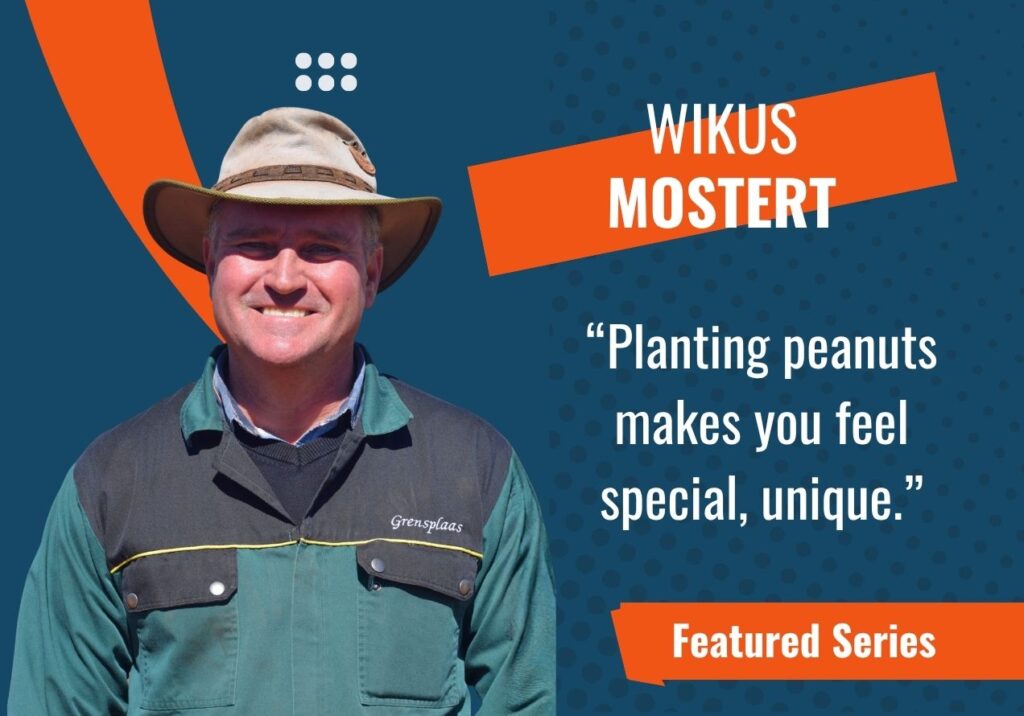
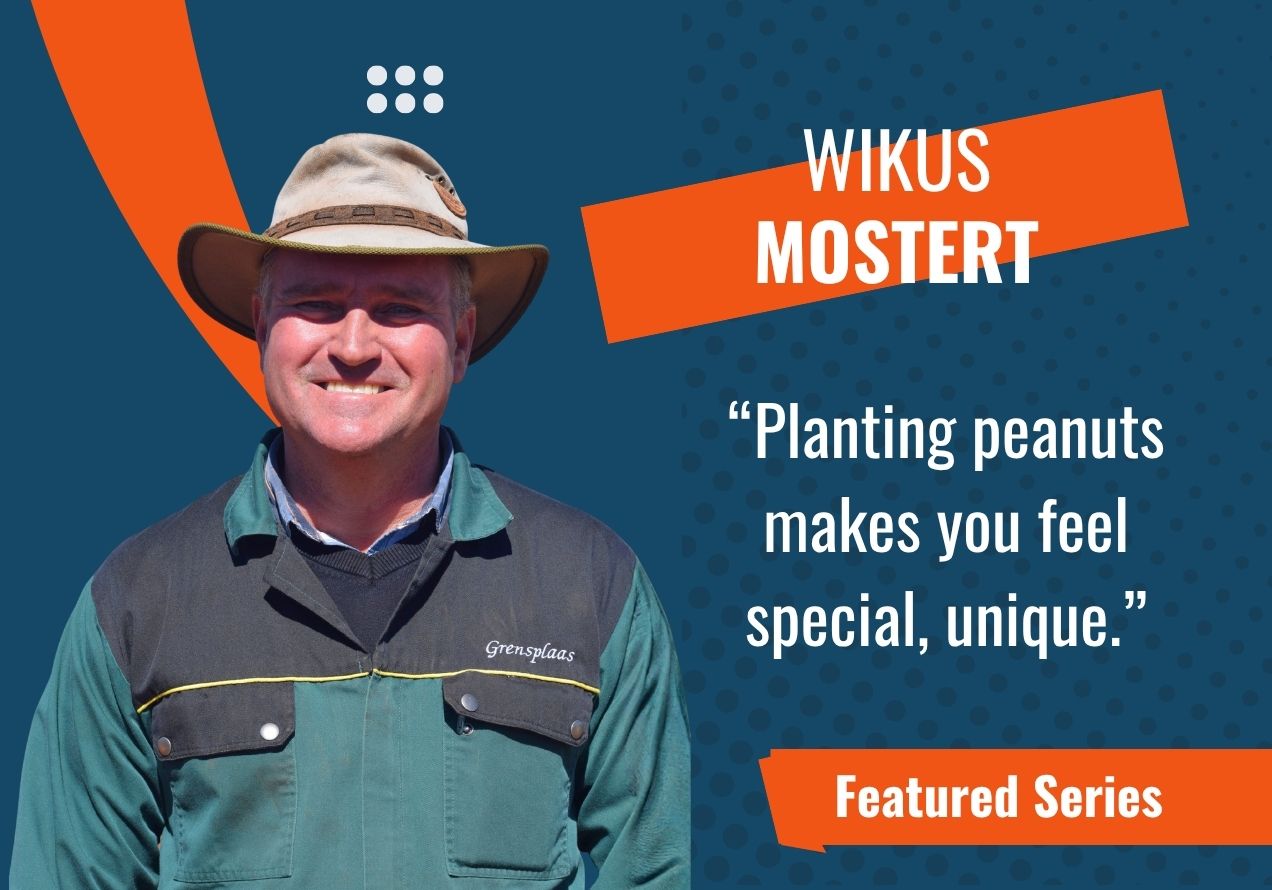
“Planting peanuts makes you feel special,” Mostert admits. “Food manufacturers are asking farmers to plant peanuts, whereas growers planting other crop types are told that there are too much of the same thing available.” He notes that this is assurance that there will always be a market for his groundnut crop, and that means they eagerly plant their peanuts.
Working With Food Processors and Manufacturers
Mostert highlights that the cultivar used in South Africa tastes incredible, but it has much lower quantities of oil. This is a trade-off that manufacturers gladly make, ensuring that flavour is prioritised.
He continues to explain that this knowledge is something that most peanut farmers understand because they previously worked much more closely with factories like Tiger Brands. “Farmers would have small de-shelling plants on the farm where they would clean and de-shell the peanuts themselves, then sell directly to the manufacturer. The co-ops stepped in to facilitate this process. The idea is that, by grouping their efforts, bigger, more expensive machines can be purchased to process more groundnuts at once. This improves quality and consistency for the product going to the peanut butter factory. Commodity traders like Trio-trade then entered the game later.”
According to Mostert, emerging farmers or farmers who plan on switching to growing groundnuts are still worth investing in. “There is ample room in the market, but the equipment can be expensive. The diggers and harvesters are much more expensive than crops like maize, but you can plant – someone will purchase your harvest,” he concludes.
Being a farmer has nothing to do with the crop you cultivate, the livestock you tend or the ownership status of the land you farm.… Read More