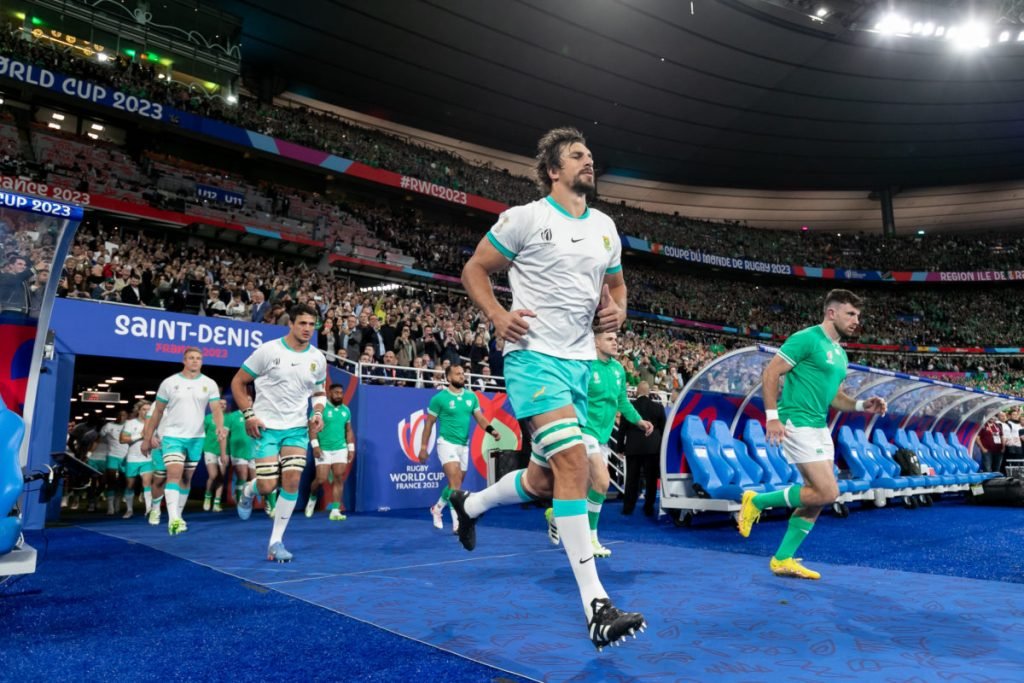

Siya Kolisi’s trophies have defined an extraordinary captaincy, but it is his humility, influence and willingness to serve that define the man, writes MARK KEOHANE in SA Rugby magazine.
Kolisi’s rugby journey will finish where it started, in Cape Town. It is appropriate and gloriously right.
But the beauty of Kolisi’s homecoming is not in the symmetry of a career coming full circle. It is in what he brings home.
Kolisi returns as a double World Cup-winning Springbok captain, a British & Irish Lions series-winning captain, a winner of back-to-back Rugby Championship titles and the leader of the team that beat the All Blacks 3-1 in the Rugby’s Greatest Rivalry series.
Those trophies define his captaincy for many, but they do not define the man. Go back to the 2015 World Cup in England. Kolisi was 24 years old and already a Springbok, but he was not yet central to the Springboks. He played 34 minutes in the entire tournament, off the bench against Japan and Samoa.
He was there to support, carrying tackle bags and water bottles, training the match-day loose forwards or celebrating the more established loose forwards in the squad like Francois Louw, Willem Alberts, Schalk Burger and Duane Vermeulen.
Siya Kolisi, in 2015, just 11 years ago, was just another squad member of the Springboks.
Today he is recognised as the most inspirational leader in Springbok history and alongside All Black Richie McCaw the most acclaimed captain in World Cup history.
Those who only want to live in the present, only know the present. To those, just a few months ago, Kolisi was a 35-year-old Springbok rugby player and, before the Rugby’s Greatest Rivalry Series, a 35-year-old already spoken of in the past tense.
How crassly wrong.
Kolisi will never be spoken of in the past tense. Not in this country and not in world rugby.
Springbok coach Rassie Erasmus knew this long before he appointed Kolisi captain in 2018. Erasmus had coached him from the age of 18 in the Western Province and Stormers system. When he made the national appointment in 2018, Erasmus did not sell a racial fairytale. He selected a rugby player and a leader.
“I like him because he is humble, he is quiet,” was Erasmus’ judgement. “I like him because he is the best player in his position and a natural leader.”
The captaincy would become historic because Kolisi was the first black African to lead the Springboks in a Test match. It became iconic because he led them to the 2019 and 2023 World Cup titles.
Kolisi’s greatest influence has always been inside the team environment, away from the podiums, the presidential handshakes and the trophy lifts.
Erasmus says Kolisi controls the climate and the mood of the team. He knows when to speak, when to sing, when to listen and when to let another leader lead. He has never needed to be the loudest man in the room to be the most influential. He delegates and empowers. He leads and is willing to be led.
Kolisi can sit with a child from a township and recognise the hunger, and he can stop for the people working the streets on behalf of the council and make them feel seen. Equally, he can hang with the world’s most famous in New York and London.
Erasmus, reflecting on Kolisi’s rise, said Kolisi never expected special treatment and never assumed a starting role was his by virtue of the captaincy.
Trust is the word most often used when I have chatted to Kolisi’s playing colleagues and coaches. It is why the Springboks follow him. It is why South Africa embraces him and why the rugby world respects him.
After the 2023 World Cup triumph, Bok coach Jacques Nienaber described Kolisi’s legacy in one sentence: ‘Siya never became the Springbok captain; he always stayed Siya.’
Fame did not become entitlement and winning did not become arrogance.
Kolisi has never presented himself as a saint because his story has imperfections, mistakes, pain and personal struggle. That makes him more relatable and not less inspirational. His closest friend Scarra Ntubeni has known him since they were 12 and shared the early Cape Town years with him at the Stormers.
Ntubeni’s assessment is the most honest: “He has had his own struggles off the field and was prepared to own them and fix them.”
Kolisi’s greatness is not that he has never fallen, but that he has never pretended he did not fall, nor has he apologised for asking for or giving help.
Ntubeni knows that help. When injuries pushed him towards quitting rugby, Kolisi did not offer him comfort dressed up as friendship. He challenged him. Quit, Kolisi told him, but do not return one day crying that you were not prepared to fight.
Ntubeni rose, fought, played more than 100 matches for the Stormers and became a Springbok.
Kolisi is a Stormers and Springbok centurion, but at 35 he speaks and acts with the enthusiasm of that 24-year-old who got just 34 minutes at the 2015 World Cup.
Kolisi has led the Springboks through the most successful period in their history. He has also led in a way that made the Springboks feel like they belonged to every South African.
SA Rugby president Mark Alexander described Kolisi as a leader who “carried the hopes of millions on his shoulders, with humility, courage and grace”.
The famed South African comedian and talk-show host Trevor Noah wrote that Kolisi had shown the world that a powerful captain is “someone who serves and inspires those he leads”.
All Blacks captain Ardie Savea, his great rival and close friend, said: “Everything he does is inspirational for everyone, including myself.”
Kolisi has changed how the world sees the Springboks. He has changed how many South Africans see the Springboks. More importantly, he has changed how countless South African children see themselves.
Kolisi’s story started in Zwide, but its professional rugby chapter started in Cape Town. He made his Stormers debut in 2012, became the captain in 2017 and the Springbok captain a year later.
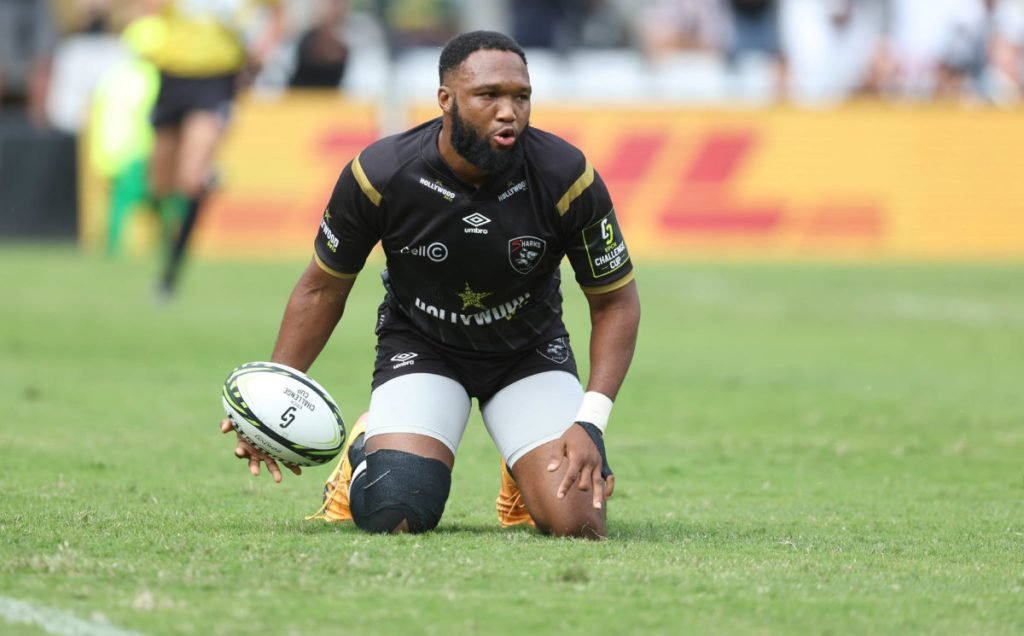
His club rugby journey took him to Durban, Paris and back to Durban. But Cape Town has always been home.
His return to the Mother City gives the Stormers a quality loose forward, but reducing his value to selection misses the scale of the signing.
He is a mentor to young leaders and he is a standard-setter for established Springboks. He is a bridge between the Stormers and the national team and he is a commercial giant whose presence gives sponsors global attention and gives supporters another reason to fill Cape Town Stadium.
Stormers CEO Johan le Roux called him “a national icon” with a powerful connection to the team and its supporters. Coach John Dobson said Kolisi could mentor the Stormers’ young players “in a way that nobody else could”.
When Kolisi’s Springbok duties ended in Perth after the 3-1 series win against the All Blacks, Dobson told him to go home to Cape Town and rest.
Kolisi refused. He flew from Perth to Dubai, then Dublin, before taking a bus across Ireland to Galway. He arrived around midnight two days before the Stormers’ opening match of the URC and made himself available to play against Connacht.
“The best place to connect with the team is on tour,” he told Dobson.
Dobson called it “actions, not words”.
Riley Norton, South Africa’s 2025 Junior World Championship-winning captain and one of the brightest young leaders in the Stormers system, saw those actions up close.
“Siya lifts the energy and the mood of a room whenever he walks into it,” said Norton. “And he does it with charisma, humility, humour and song. He has an ability to
calm everyone, encourage young players, like myself, and mentor.
“He shares so much knowledge and his own experiences, but he does it in a conversational and heartfelt way.
“Here is a back-to-back World Cup-winning captain and he is helping with strapping, carrying the water and ready to serve the team in any capacity if he is not on the field.
“As a player, you just want to follow him into battle.”
NEW: SA Rugby mag opens its vault
There is the cover story.
Not the Webb Ellis Cup in Yokohama. Not the Webb Ellis Cup in Paris. Not the Lions series, the Rugby Championship titles or the conquest of the All Blacks.
The story is the water bottle.
In 2015, Kolisi carried it for those picked ahead of him and in 2026, he carried it for those who grew up wanting to be him.
The boy from Zwide became the king of world rugby, but he remained a servant to the team.
That is his value to the Stormers, the Springboks and the sport.
He plays and he leads, but what differentiates his career is that he has always served club and country.
– This article first appeared in the November 2026 issue of SA Rugby magazine.

Photo: Anton Geyser/Gallo Images
The post Siya inspiration: The value of Kolisi appeared first on SA Rugby magazine.
Siya Kolisi’s trophies have defined an extraordinary captaincy, but it is his humility, influence and willingness to serve that define the man, writes @mark_keohane
The post Siya inspiration: The value of Kolisi appeared first on SA Rugby magazine. Read More