
Food security remains an ever-present concern in South Africa. Fuelled by a high cost of living, soaring unemployment rate, and a worsening global economy, more than 18 million people live in extreme poverty. Some children’s only meal is provided through school meal programmes, but they remain underfed, stunted and malnourished. Unable to concentrate on schoolwork, they struggle to succeed and eventually enter an oversaturated job market where jobs are scarce, and workers are numerous. Yet, the county produces a surplus of food every year. In fact, ten million tonnes of food go to waste every year. Why? Fresh goods like veggies and fruit spoil because of being natural products, and because they are too expensive. Consumers need to calculate their grocery baskets and tighten their belts, holding their breath as the till calculates.
The question arises: If food prices continue to rise, and people remain jobless, how can they feed their families or even generate an income?
Food Sock Answers the Call
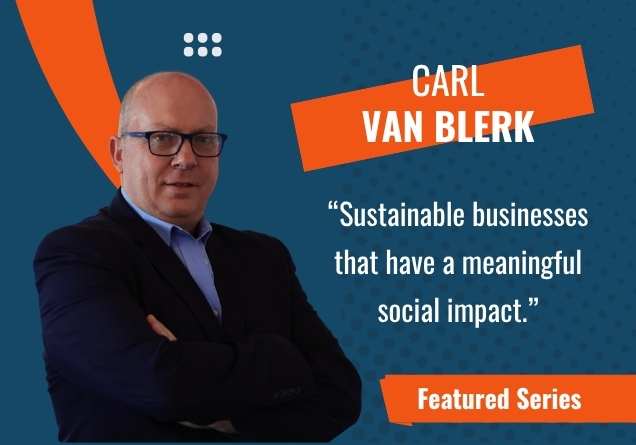
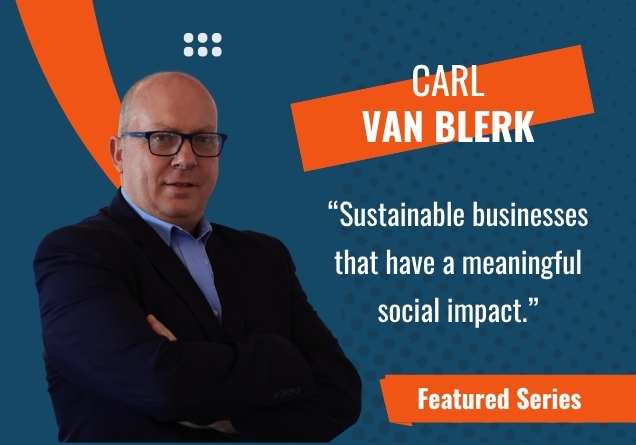
“Food Sock Meals was born out of both necessity and lived experience,” says Carl van Blerk, the founder and CEO of Food Sock Meals and founder of Heartfelt Foods. Food Sock Meals produces shelf-stable meal products. It is intended to provide convenient and cost-effective food options for families and communities. Heartfelt Foods, on the other hand, works alongside feeding schemes, NGOs and corporate partners supporting hunger alleviation initiatives.
“Before starting Food Sock Meals, I operated a community food pantry in George, called the Garden Route Food Pantry, where I saw first-hand the reality of hunger in South Africa,” Van Blerk recalls. “What struck me was that food insecurity doesn’t only affect unemployed people – it impacts working families, pensioners, students, disaster victims and communities facing temporary hardship.”
He explains that he wanted to create a meal solution that was affordable, nutritious, shelf-stable and easy to prepare, but without carrying the stigma often associated with food aid. “The vision was to develop a product people would genuinely choose to eat because it tastes good, not simply because it is cheap.”
The original concept was simple: create complete meals in a pouch that require only water and heat, have a long shelf life, feed multiple people, and can work equally well in homes, relief programmes, retail stores, schools or disaster response situations.
“What started as a small idea has grown into Food Sock Meals, supplying customers nationally, working with NGOs, feeding schemes, retailers and resellers, while also expanding internationally.
“At its core, the business was never just about food — it was about dignity, accessibility and creating practical solutions.”
He notes that starting a business that also addresses social causes wasn’t the main goal, but it is a natural consequence of his strong desire to solve problems he witnessed.
“Over time, it became clear that business and social impact do not have to operate separately. I believe sustainable impact happens when solutions are commercially viable. Donations alone cannot solve long-term challenges – scalable business models can. That philosophy eventually led to the growth of Food Sock Meals and Heartfelt Foods.
“The aim has never been to build a charity disguised as a business, nor a business indifferent to social challenges. It has been proven that entrepreneurship can create both economic value and meaningful impact.
Affordability with Flavour
Van Blerk shares that developing the thirteen flavours was a crucial part of growing the brand. “Flavour development is one of the most important parts of our process because affordability means very little if people do not enjoy eating the product. We focus heavily on familiar flavours that resonate with South African households and cooking traditions. Meals such as breyani, tomato bredie, mutton stew and chakalaka-inspired dishes reflect tastes many people already know and trust.
Van Blerk states that when developing products, they ask several questions:
- Is this flavour culturally familiar?
- Can it appeal across multiple demographic groups?
- Will children and adults both enjoy it?
- Can we maintain nutrition and affordability?
- Is it suitable for large-scale feeding environments as well as home consumption?
“We work with specialist flavour houses and continually refine recipes based on customer feedback, reseller input and repeat purchase behaviour,” he explains. “The goal is always to strike a balance between comfort food, nutrition, practicality and cost.
Balancing quality (not just flavour) with affordability is one of the business’s biggest challenges, but Van Blerk says that it is also one of its strengths.
“We improve continuously through customer feedback, internal testing, ingredient optimisation and strict production controls. Our facility operates under ISO 22000 food safety systems, which means quality and consistency are monitored throughout manufacturing.
“We deliberately challenge the assumption that affordable food must mean poor quality. Instead, we focus on:
- Ingredient efficiency rather than unnecessary cost
- Long shelf-life products that reduce waste
- Scalable manufacturing methods
- Continuous recipe refinement
- Strong food safety systems
- Listening closely to customers and feeding organisations
He shares that innovation often comes from asking: “How do we improve the experience without increasing the cost?”
“That mindset has helped us keep products accessible while improving taste, presentation and packaging.”
Business ‘in a Bag’
Beyond making food accessible to families, Food Sock also offers South Africans economic opportunities. “One of our priorities has been creating economic opportunities around the product, not only selling food. This is done through Food Sock Meals’ established reseller programme, where individuals or businesses purchase products at wholesale rates and sell into their own communities, networks, schools, churches, informal markets, retail environments or corporate spaces.
“Many resellers start with relatively small investments and build recurring customer bases over time. The model works because Food Sock Meals serves multiple markets simultaneously,” he says.
These markets include:
- Household consumers
- NGOs and feeding schemes
- Schools
- Churches
- Disaster relief
- Retail customers
- Corporate social investment programmes
“For us, growth is not only measured by units sold but also by how many people can generate income through the brand,” he smiles.
Award-winning Innovation
Van Blerk was recognised among South Africa’s Top 5 Startup Businesses in 2023, received the FlySafair Business Booster Award, and, most recently, was named IMM Institute Entrepreneur of the Year 2026.
“Receiving the IMM Entrepreneur of the Year 2026 award was incredibly meaningful because entrepreneurship often involves years of uncertainty, setbacks and difficult decisions that happen behind the scenes,” he shares. “The recognition builds on other milestones in our journey, including being named among South Africa’s Top 5 Startup Businesses in 2023 and receiving the prestigious FlySafair Business Booster Award.
“Each recognition has reinforced confidence in what we are building through Food Sock Meals and Heartfelt Foods. For our brand, it has created additional credibility and opened doors for conversations around food security, partnerships and expansion.”
He says that these awards highlight that businesses focused on practical social impact can also be commercially viable, innovative and scalable.
“I hope the recognition sends a message to other entrepreneurs that purpose-driven businesses deserve a place alongside traditional commercial success stories.”
Social Impact that Corporates can Support
“Through Heartfelt Foods, we actively encourage Corporate South Africa, businesses and individual donors to support feeding initiatives by sponsoring nutritious food products for beneficiaries, including schools, soup kitchens, community feeding schemes, NGOs and vulnerable households,” he shares.
He elaborates on Heartfelt Foods’ partnerships. “To ensure transparency and maximise donor value, we partner with Eden Community Hope Outreach (ECHO), a registered NPO and Public Benefit Organisation, enabling qualifying donors to receive Section 18A tax certificates for approved donations. This model allows organisations to contribute toward food security in a structured, accountable way while helping us extend nutritious meals to communities where they are needed most.
“For me, this reflects what entrepreneurship should be – creating sustainable businesses that also leave a meaningful impact on society.” He concludes.
Food security remains an ever-present concern in South Africa. Fuelled by a high cost of living, soaring unemployment rate, and a worsening global economy, more… Read More