
Situated at the foothills of the Great Winterberg mountain range lies the rural town of Aidelade. This small farming community in the Eastern Cape is secluded, making it difficult to get even basic fresh staples like bread. Yet, it’s often challenges like these that give rise to entrepreneurship: when an ordinary individual identifies an unfulfilled need and finds a way to meet it. This is the story of Xolani Dyesha, founder of Rise & Shine Bakery.
As the Russian author Fyodor Dostoevsky said, there is not a thing that is more positive than bread. But what if a person struggles to find this staple, what then? Dyesha noticed that a steady supply of fresh bread was hard to come by, and this led him to start his bakery.
Entrepreneurship from A Young Age
“When I was a young man growing up in Adelaide, my grandmother, who was a business-minded woman, introduced me to entrepreneurship,” Dyesha shares. “I used to assist her by selling magwinya and fish outside taverns and at other busy intersections.
“During my high school years, I started selling sweets at school to contribute towards our household income. My grandmother also taught me the importance of saving and protecting business capital.”
After completing school, Dyesha found employment at a retail store in Cape Town. While working there, he continued selling perfume and clothing, buying stock in Cape Town and selling it in Adelaide. “I resigned in 2015 and received my resignation package. I initially used part of it to start a Chisa Nyama business in Adelaide, which gave me a better understanding of the local economy and customer needs.”
“It was during this time that I identified a gap in the bakery industry, particularly in the supply of commercial bread. Bread distributors would come to Adelaide about three times a week, which often left households and businesses without a reliable supply of bread for several days. I saw an opportunity to address this gap and decided to invest the remainder of my resignation package into the bakery business in 2018.”
The Challenge of Rural Business
Operating a manufacturing business in Adelaide was challenging, particularly in the beginning, because of supplier routes and transportation costs. “Some suppliers would give us the option to collect ingredients ourselves or arrange collection at our own expense. This added significantly to our operating costs because some suppliers were more than 200 kilometres from Adelaide,” he recalls.
“At the time, I also did not have a reliable business vehicle, so I had to hire someone to collect the ingredients on our behalf. This made procurement more expensive and complicated and placed additional pressure on our operating budget.”
As an early-stage entrepreneur in Adelaide, Dyesha had many other challenges to overcome too. Especially with regard to infrastructure and compliance.
Infrastructure challenges consisted of inadequate premises. Therefore, he approached the municipality for permission to use an old public school building. However, the location was exposed to criminal activity, which created safety concerns for employees. The building itself did not meet hygiene requirements, and the surrounding area was being used as a dumping site. “We had to regularly clean and disinfect the premises, which created an additional burden on our operating expenses,” he notes.
In terms of compliance challenges, as the business grew, it struggled to keep up with compliance requirements, including health and safety training and food safety training in terms of Regulation R638. “Our financial record-keeping was also poor at the time, which resulted in challenges with SARS compliance, particularly regarding income tax,” he admits.
But beyond these challenges, Dyesha and his employees struggled to meet customer demands too.
“We did not have a reliable delivery vehicle,” Dyesha says. “But someone introduced me to the Amakhala Emoyeni Community Trust and advised me to prepare a business plan and apply for assistance. I followed the advice, and the Trust provided funding for baking equipment.”
This is a prime example of the impact that the right funding at the right time can make in a business.
“The equipment immediately improved our production capacity. This allowed us to move from the previous premises into a rent-to-buy building that provided a more suitable environment for the business to operate. As the business became more stable, we were able to acquire four delivery vehicles and gradually expand our operations into a nearby town,” Dyesha tells.
Partnerships that Matter
In 2021, Rise & Shine Bakery partnered with the South African Institute of Chartered Accountants (SAICA) Enterprise Development for mentorship, governance, and financial management. This was instrumental in leading the business to what it is today.
“The SAICA partnership has played an important role in where the business is today. Our financial management improved from being poorly structured to having better systems that are prepared for an audit and the preparation of financial statements.
“The mentorship strengthened our financial management by helping us establish proper accounting systems, budgeting processes, cash-flow management, stock control and monthly management accounts. It also helped us monitor profitability, control expenses, prepare financial forecasts and maintain more accurate financial records,” he explains. “This improved our decision-making and strengthened the bakery’s financial readiness when applying for funding or engaging with potential investors.
From Baking Bread to Commercial Success
Today, Rise & Shine Bakery supplies over 80 spaza shops, hospitals, and community facilities across Bedford, Adelaide, and Cookhouse.
“Our expansion strategy is based on reliable delivery routes, grouping orders according to geographic areas, maintaining sufficient stock and using our branded delivery vehicles to provide consistent service,” Dyesha elaborates. “We also focus on building direct relationships with retailers, wholesalers, schools, hospitals, government institutions and other bulk customers by offering competitive pricing and dependable delivery.
“Where practical, we appointed local sales representatives and maintained regular communication with customers. Building relationships with businesses in towns such as Bedford, Cookhouse, Somerset East and Fort Beaufort gradually helped us establish a wider distribution network while keeping our logistics costs under control.”
Beyond commercial growth, the business actively creates local jobs and donates bread to local crèches and vulnerable households. “Supporting the community plays an important role in a local business such as the bakery because it helps build trust, strengthen relationships and demonstrate our commitment to the community we serve,” Dyesha highlights. “For the bakery, supporting local schools, community organisations, vulnerable families and other community initiatives has helped increase our visibility while contributing to local development.
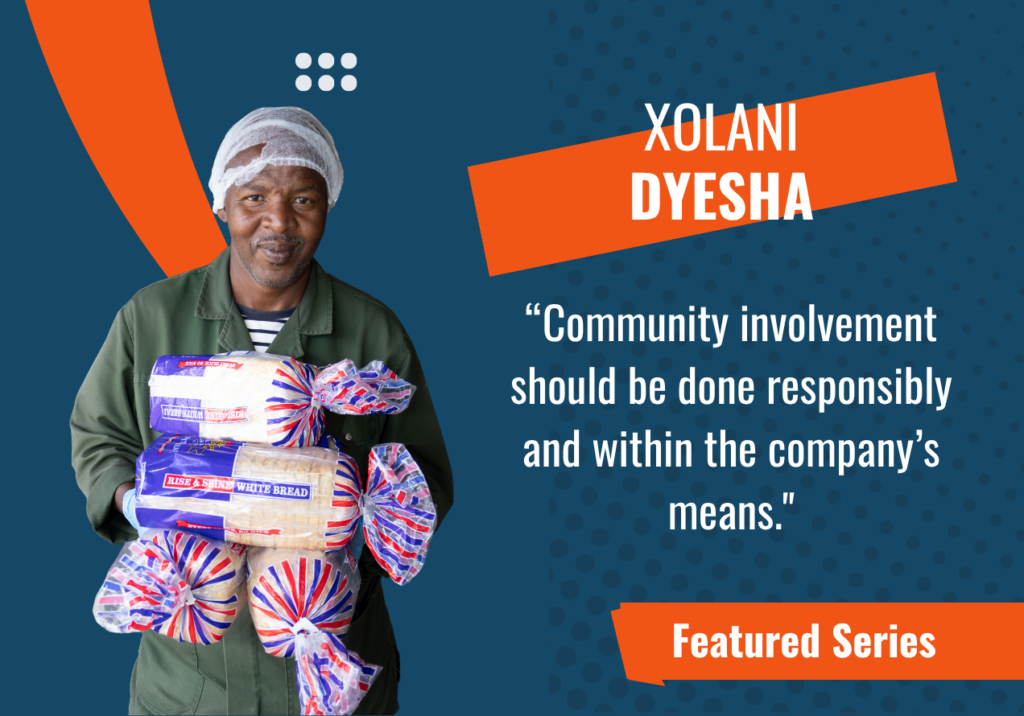
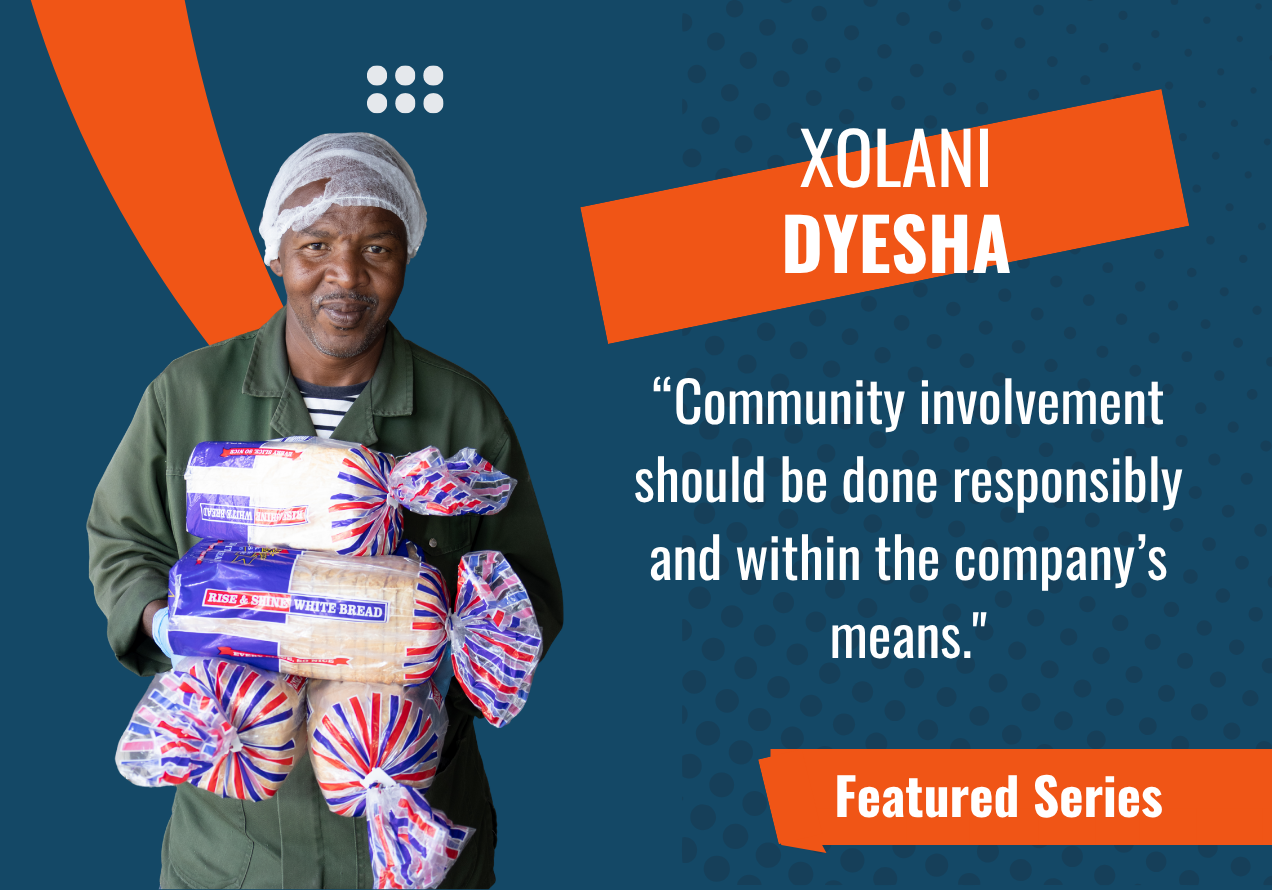
“We believe community involvement should be done responsibly and within the company’s means. When a business contributes positively to its community, it can also strengthen relationships with local customers and organisations and encourage broader support for the business,” he concludes.
Situated at the foothills of the Great Winterberg mountain range lies the rural town of Aidelade. This small farming community in the Eastern Cape is… Read More