When Girls Get the Chance, They Change Everything
 Across Sub-Saharan Africa, girls are graduating with STEM degrees at some of the highest rates in the world.
For many girls in rural communities, however, the path to a science education is not straightforward. It is interrupted — by school fees that cannot be paid, by family expectations that place marriage before all else, by classrooms where girls rarely see themselves reflected in the teachers at the front of the room. The barriers are not abstract. They are specific, structural, and deeply familiar to the girls navigating them every single day.
Without intervention, talent goes unrealized, not for lack of ability, but lack of opportunity. A girl who might have become an engineer, a doctor, a technology entrepreneur, or a science teacher instead has her path closed before it begins. And the loss is not hers alone. It is a loss felt by the communities, the schools, and the health systems that will never benefit from what she could have contributed.
That is where scholarships and mentorship make the difference.
When a girl receives financial support to stay in school, she does not just keep her seat in the classroom, she gains the space to discover what she is capable of. A scholarship removes the immediate threat of dropout. It signals to her, and to the people around her, that her education is worth investing in. It buys her time to study, to fail, to try again, to grow into the student and person she is becoming and wants to become.
Mentorship does something different but equally powerful. It closes the distance between where a girl is and where she is trying to go. When a girl can point to a woman who looks like her, who came from a community like hers, and who is now practicing medicine or teaching physics or building software, the goal stops feeling abstract. It becomes possible. Mentors do not just give advice; they make futures feel real.
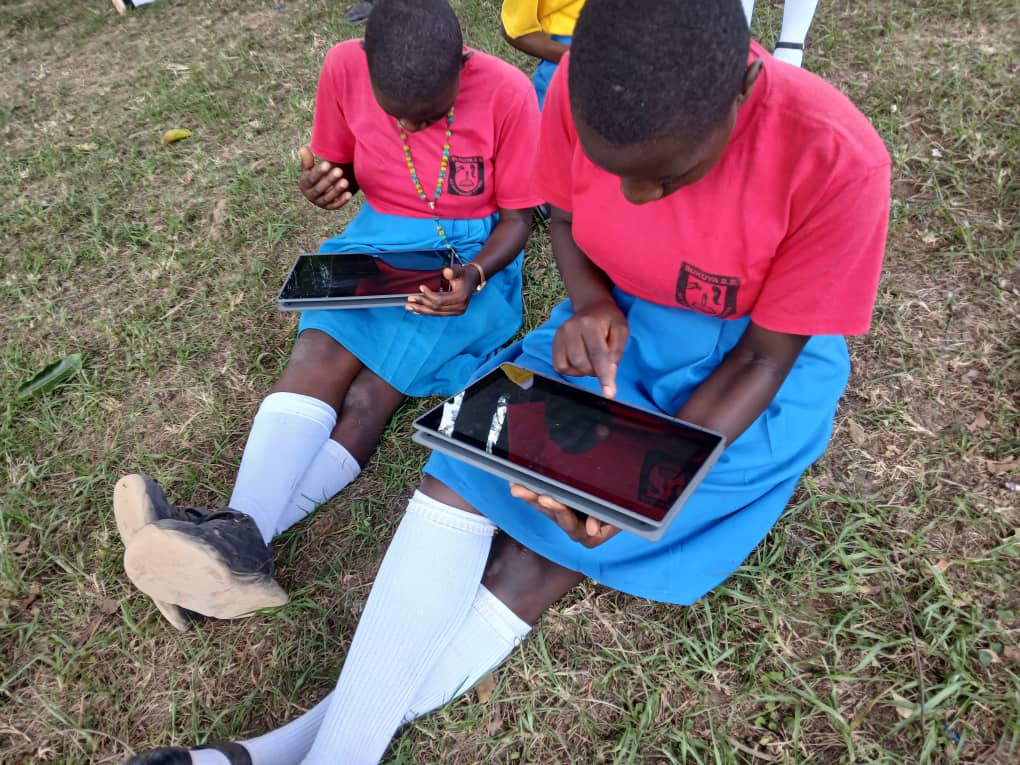
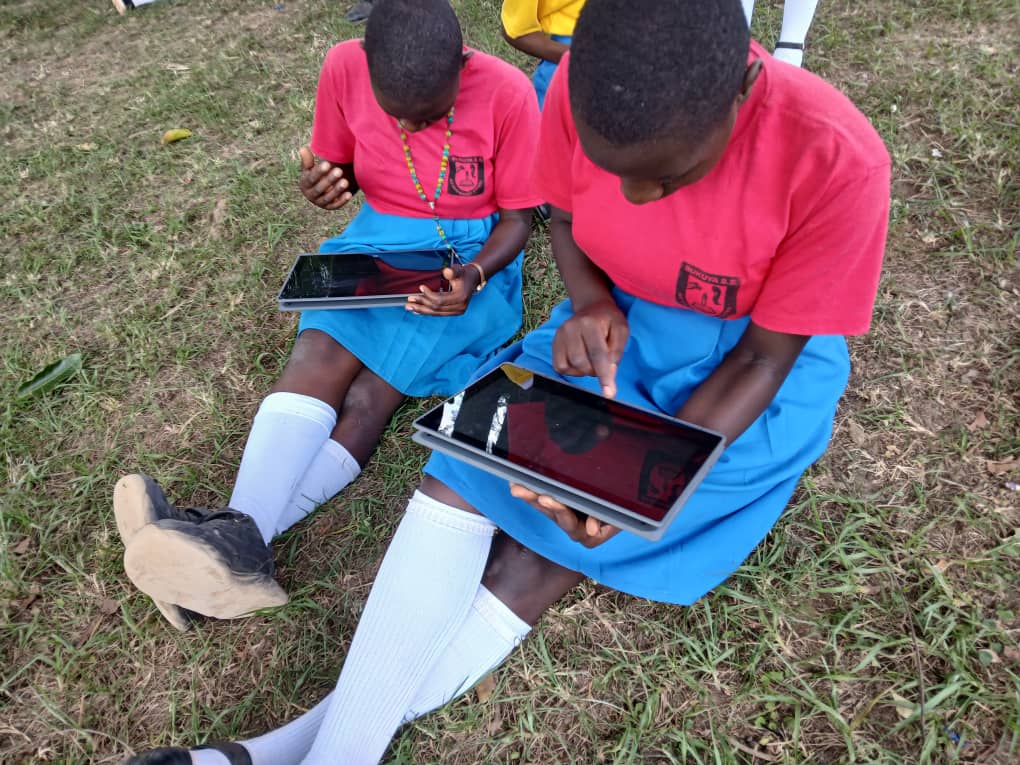
The girls supported by Asante Africa Foundation are living proof of this. They are studying physics, mathematics, biology, and information technology. They are pursuing careers in education, medicine, and innovation. Some came to STEM unexpectedly, redirected by circumstance into subjects they never imagined choosing, and found, over time, that what felt like a detour was a destination. Others pursued science with clear intention from the start, armed with ambition and in need of only one thing: support.
What unites them is not a single story. It is a single truth: when young women are given resources, encouragement, and space to engage with STEM, they do not just survive in these fields. They thrive. They lead. They return to their communities as teachers, healers, and role models, multiplying the impact of every investment made in them.
Investing in girls in STEM is not charity. It is strategy. It is how communities build the next generation of problem-solvers. It is how schools gain their most passionate teachers. It is how the gender gap in science and technology begins, finally, to close.
Girls in STEM don’t lose their dreams. They expand them.
 Breaking Barriers in ICT and Beyond: Rosette’s Story
On International Girls in ICT Day, one of many stories make the case: a girl who was told her potential had limits and chose science to prove otherwise.
Rosette grew up in a community where girls’ education was rarely prioritized. The message around her was quiet but consistent: that her future had already been decided; that ambition was a luxury she could not afford, and that the path most likely ahead of her was tied to a marriage— not a classroom, not a career, not a choice. She faced the real and pressing threat of early forced marriage before she had a chance to demonstrate what she was capable of.
At a critical moment, Asante Africa Foundation stepped in.
By supporting Rosette’s return to school, Asante Africa gave her more than a uniform and textbooks. It gave her a platform. A place to stand, and a chance to show what she could do when the door was not closed in front of her. And when that door opened, Rosette did not hesitate.
She chose one of the hardest paths available: science.
Today, Rosette is studying Biology, Chemistry, Mathematics, and Information Technology, with a clear and unwavering goal: to become a doctor. Her choice to include IT in her studies is not incidental. She understands that the medical field is increasingly inseparable from technology — from digital diagnostics and electronic health records to telemedicine and data-driven care. Rosette is not simply preparing to enter healthcare. She is preparing to operate at the intersection of science, medicine, and the digital tools that are reshaping how both are practiced.
For Rosette, the pursuit of science is about more than a personal milestone. It is about proof. Proof that discipline, intellect, and ambition are not defined by gender and instead are amplified through it. Proof that a girl from a community where her education was once treated as optional can master the most rigorous academic subjects available to her. Proof that opportunity, not innate ability, is what makes the difference between a dream realized and a dream deferred.
Her vision extends beyond her own graduation. Rosette hopes to return to her community not only as a medical professional, but as a visible example of what is possible for girls who are given the chance to try. She wants to be the person that younger girls can point to when someone tells them their ambitions are too large.
“She did it. So can I.”
On International Girls in ICT Day, Rosette’s story is a reminder of what is at stake when girls are denied access to education in science and technology and what becomes possible when that access is restored. It is not just a career that changes. It is a community’s understanding of what young women are capable of.
Access to education in ICT and STEM does not just build careers. It reshapes expectations. And when expectations change, everything else can follow.