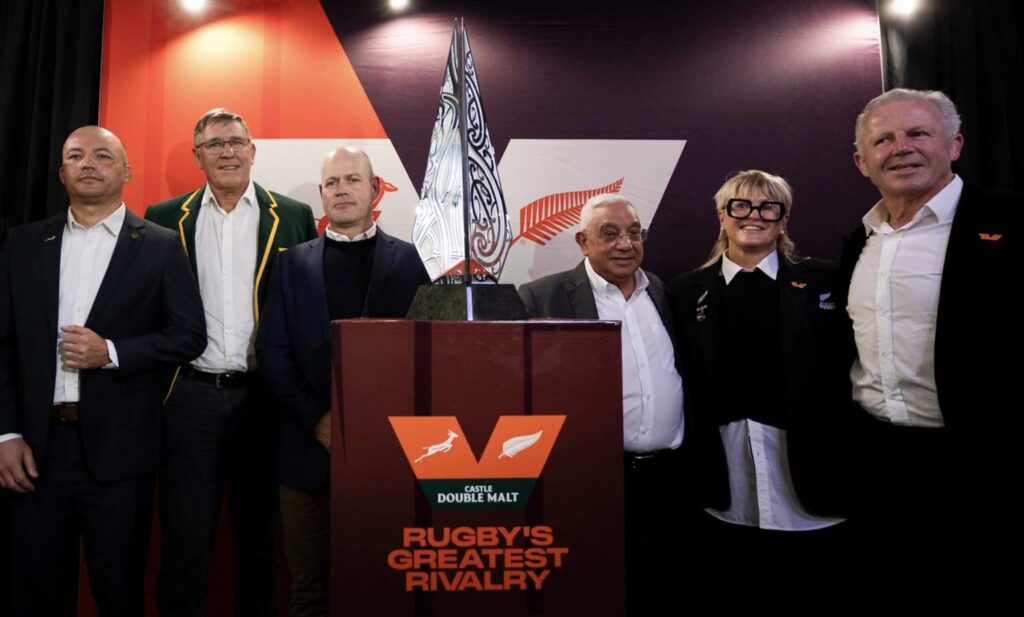
When Rugby’s Greatest Rivalry kicked off at Ellis Park in August, few dared hope it could mend a relationship that had spent half a decade drifting apart, writes CLINTON VAN DER BERG.
By the time the series wrapped up in Baltimore, it had done just that, and then some.
The wound went deeper than nostalgia. When Super Rugby collapsed in 2020, then SA Rugby CEO Jurie Roux did not hide his anger, accusing NZ Rugby of a unilateral approach and saying SA Rugby had been blindsided by partners it had trusted for a generation.
That September, South Africa’s provincial unions voted to pull the Bulls, Stormers, Sharks and Lions out of Super Rugby altogether, taking their four franchises north to the expanded United Rugby Championship instead.
Who carried the blame for the split still gets argued over. Critics of New Zealand point to NZ Rugby’s insular posture in that period, the lack of real consultation before the Aratipu Report charted a domestic and trans-Tasman future.
That move effectively forced South Africa’s hand, leaving SA Rugby to go find its own commercial security elsewhere.
Whatever the rights and wrongs, the fallout was real. Something in the relationship cooled.
The mutual respect never disappeared entirely. It simply had nowhere left to be expressed on a regular stage.
This series gave it one back, and rugby is richer for it.
KEO: Greatest Rivalry lived up to hype
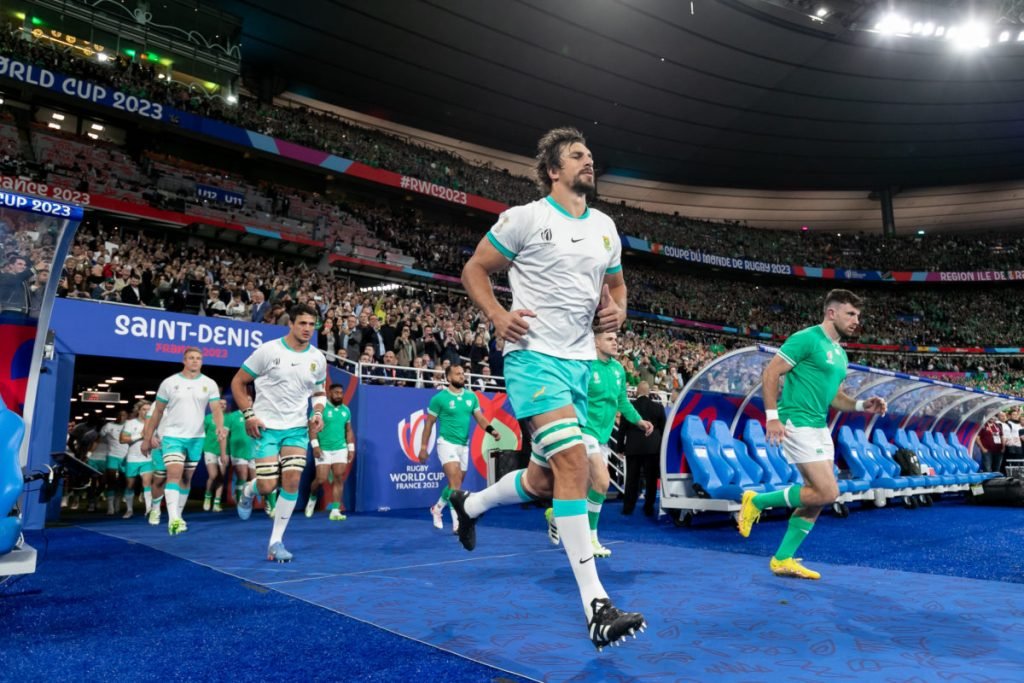
From the opening whistle at Ellis Park, where the All Blacks stunned the world champions, through the white-knuckle Cape Town response, the FNB Stadium classic that swung the series South Africa’s way, and the Baltimore finale on American soil, this was a series played almost flawlessly. Brutal in the collisions. Generous in the aftermath.
Even Rassie Erasmus and Dave Rennie, sparring through mind games and pointed press conferences all series long, never let the needle stray far from the game itself, and found time for a beer together once the whistle went. Every Test ended the same way: bodies spent, colours mixed, arms around shoulders.
That spirit ran straight into the stands. Springbok and All Black jerseys stood shoulder to shoulder in the same sections. Banter flowed both ways, sharp but never bitter. Friendships formed between supporters who seldom crossed paths outside a World Cup cycle. The All Blacks were not adopted only by the Cape Crusaders. The whole country took to them, an extraordinary thing for a fanbase raised on fierce rivalry.
WATCH: What it means to be great rivals
That is the real achievement here. This series needed to repair something as much as it needed to entertain, and it managed both. Five years after a bitter, self-interested divorce, the two best teams in the world walked away from Baltimore with a relationship stronger than it has been in years.
As ever, rugby found a way.
The post Rugby’s Greatest Rivalry repairs the rift appeared first on SA Rugby magazine.
When Rugby’s Greatest Rivalry kicked off at Ellis Park in August, few dared hope it could mend a relationship that had spent half a decade drifting apart.
The post Rugby’s Greatest Rivalry repairs the rift appeared first on SA Rugby magazine. Read More